
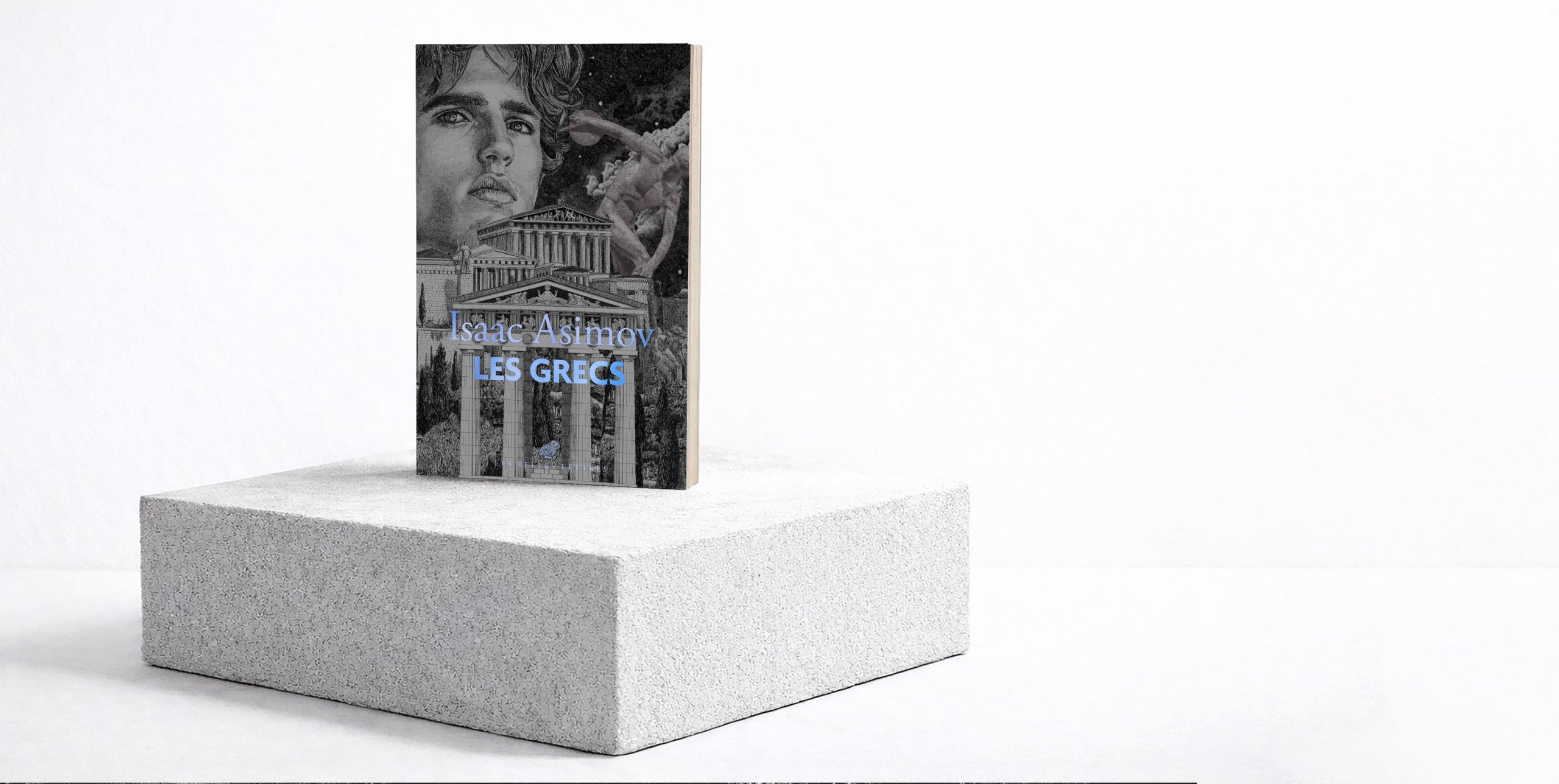
Six illustrations du livre publié aux Belles Lettres – partie II
Dans Les Grecs, Isaac Asimov retrace l’histoire fondatrice du monde grec en la plaçant, dès l’origine, dans une tension permanente entre deux rives: l’Europe et l’Asie.
Depuis les premiers mythes jusqu’aux grands bouleversements politiques, l’épopée grecque se construit dans l’affrontement (Grèce et Troie, Grèce et Perse, Grèce et Empire ottoman) un conflit de civilisations qui se prolonge au fil des siècles.
Les six dessins présentés ici illustrent les chapitres 7 à 12 du livre. Chacun d’eux propose une reconstitution visuelle rigoureuse, nourrie par les sources historiques et archéologiques, tout en laissant place à une interprétation graphique sensible.
⸻
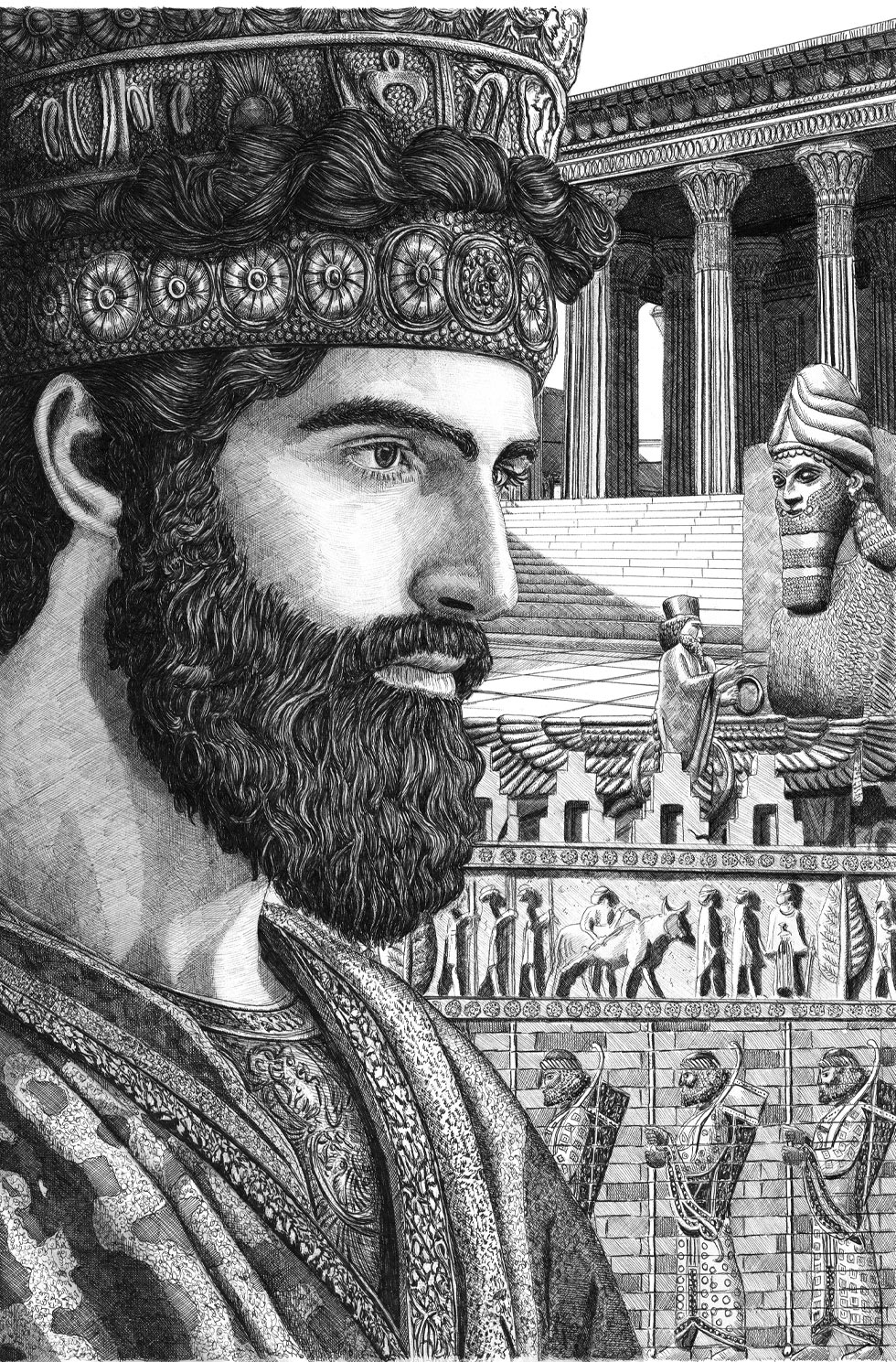
Dessin VII – L’Asie mineure
Darius, symbole de la puissance perse et l’un des personnages les plus emblématiques de l’empire achéménide, se tient devant son majestueux palais de Persépolis. Le monument, dominé par des colonnes imposantes et des sculptures raffinées, reflète la grandeur de la civilisation perse. À droite, le Faravahar, symbole central de la Perse antique, représente la protection divine. Darius, vêtu d’une couronne orientale et de vêtements luxueux, incarne l’autorité et la grandeur d’un empire à son apogée.
⸻
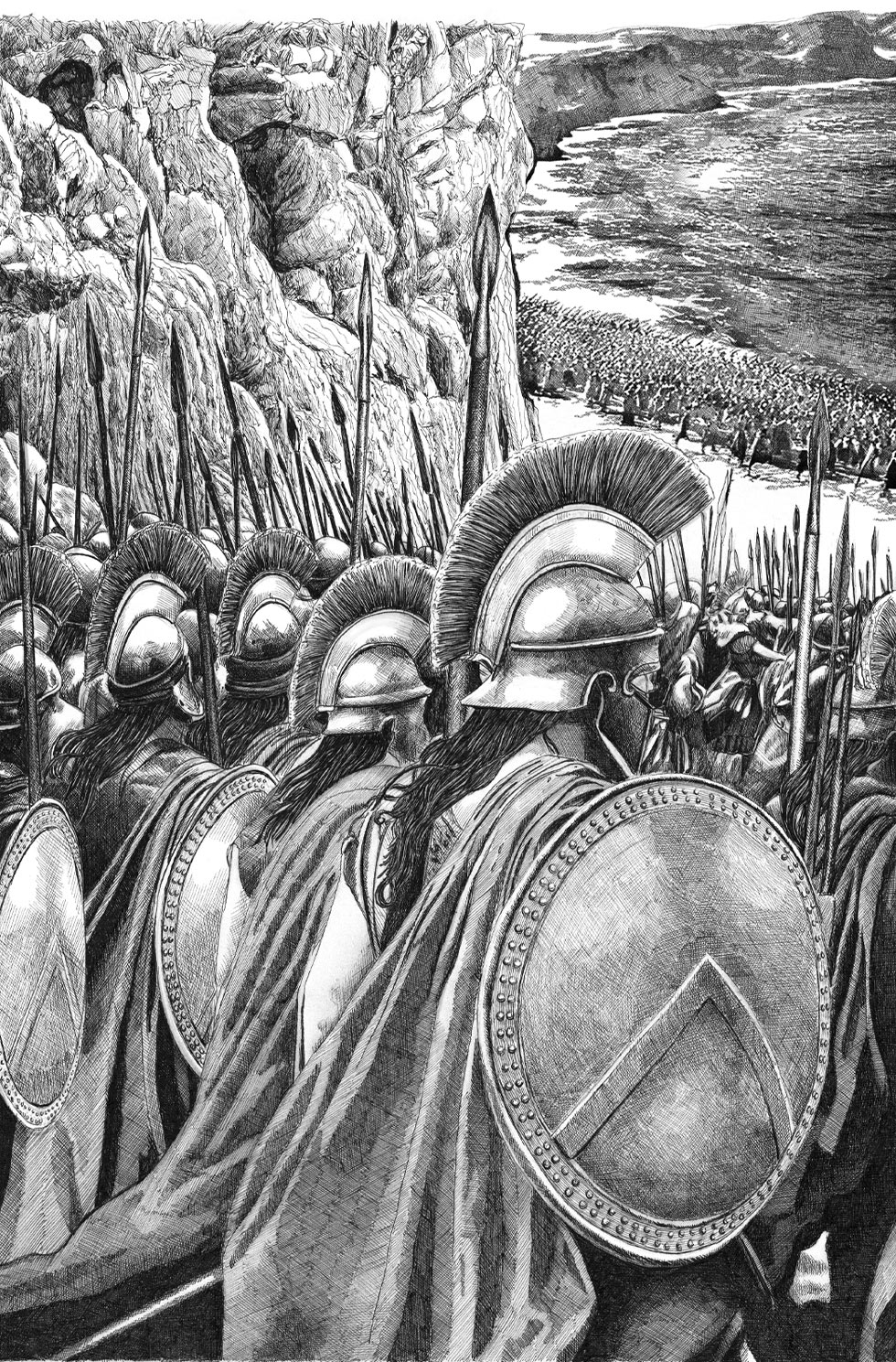
Dessin VIII – Les Guerres Médiques
Les Spartiates, reconnaissables à leurs boucliers ornés du « V » inversé, avancent résolument dans le défilé des Thermopyles. La phalange spartiate, vue de dos, incarne la discipline et la détermination. À gauche, la falaise abrupte domine la scène, tandis qu’en arrière-plan, l’armée perse se profile, massive et menaçante. Cette bataille légendaire illustre le courage des Spartiates, qui se sont sacrifiés pour défendre la Grèce contre l’envahisseur perse.
⸻
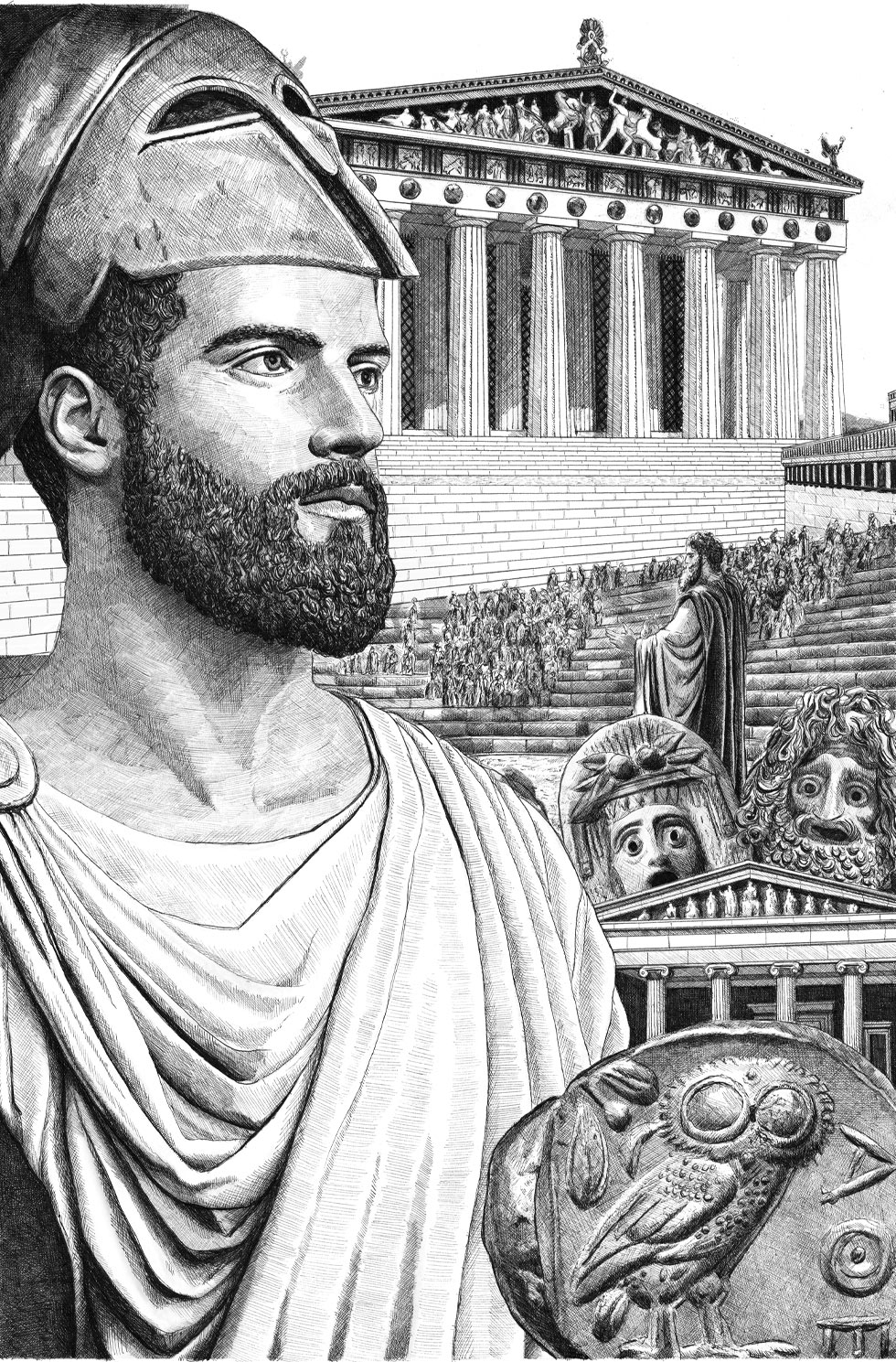
Dessin IX – L’âge d’or
Périclès, figure emblématique de l’Athènes antique, se tient fièrement, vêtu de sa chlamyde et de son casque. Ce portrait symbolise l’âge d’or d’Athènes, marqué par un rayonnement culturel, artistique et politique sans précédent. En arrière-plan, le Parthénon et un théâtre antique témoignent de l’apogée de la cité. Les masques tragiques grecs de l’époque de Périclès, figurant en bas du dessin du théâtre, étaient utilisés pour exprimer de manière exagérée les émotions et les caractéristiques des personnages dans les tragédies, permettant aux acteurs de jouer plusieurs rôles. Ils amplifiaient l’expression faciale des acteurs pour que les émotions soient visibles même à distance dans les grands théâtres. Ces masques jouaient également un rôle symbolique et rituel, renforçant la dimension religieuse des représentations théâtrales en l’honneur de Dionysos. En dessous, un bâtiment de l’Agora reflète la vitalité intellectuelle et politique de cette époque, tandis qu’une pièce de monnaie ornée d’une chouette rappelle la puissance économique de la cité.
⸻
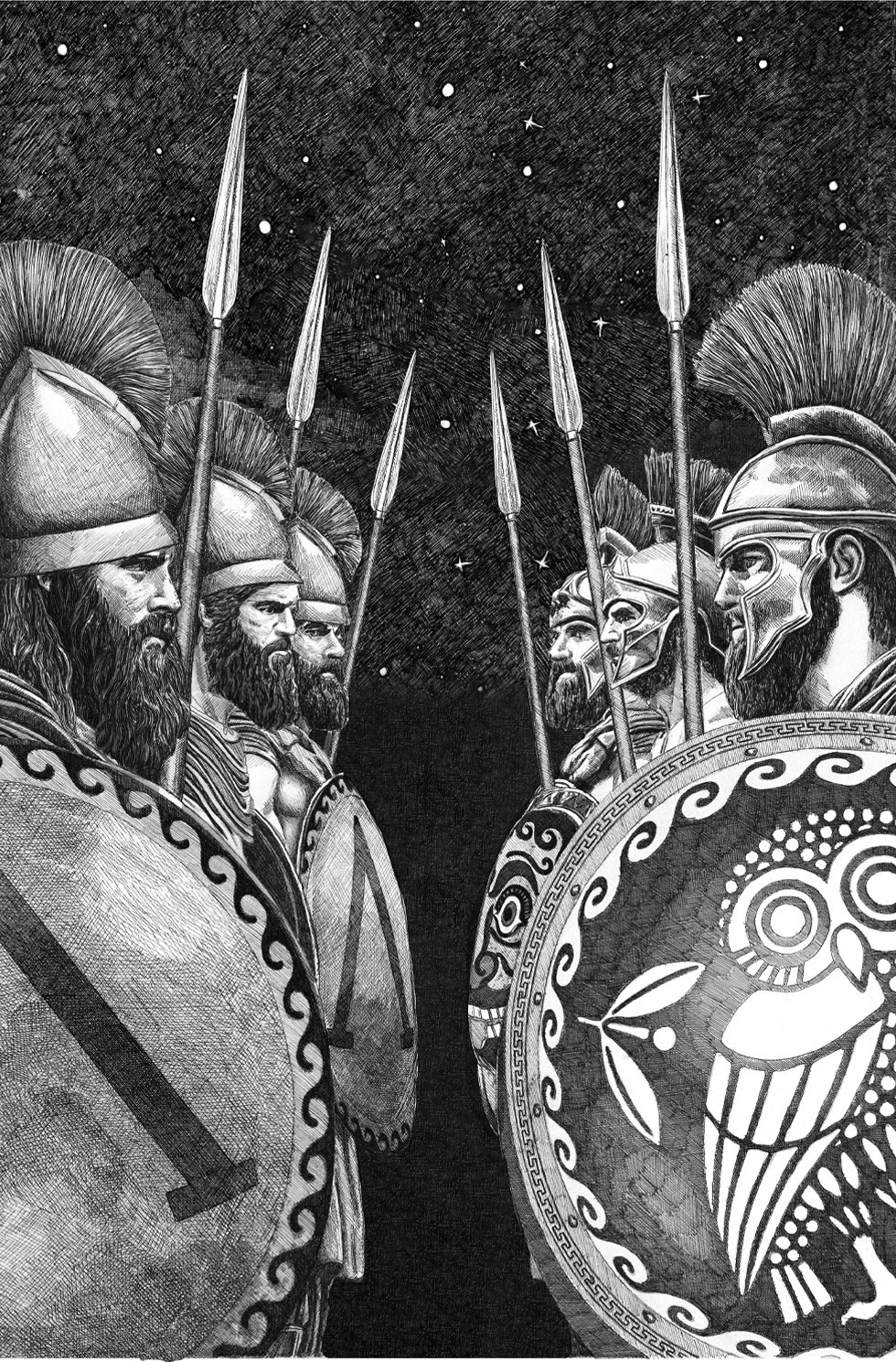
Dessin X — La guerre du Péloponnèse
Athéniens et Spartiates se font face dans une confrontation tendue, illustrant la rivalité entre ces deux puissances. Les Athéniens portent des casques à crête, tandis que les Spartiates arborent des casques plus sobres et des longues barbes, signes de leur identité. Les boucliers renforcent cette distinction, avec ceux des Spartiates marqués du « V » inversé, tandis que ceux des Athéniens présentent des motifs variés. Cette scène illustre les similitudes culturelles et les différences subtiles entre ces deux cités, au cœur de l’une des guerres les plus célèbres de l’Antiquité.
⸻
dessin XI – L’hégémonie de Sparte
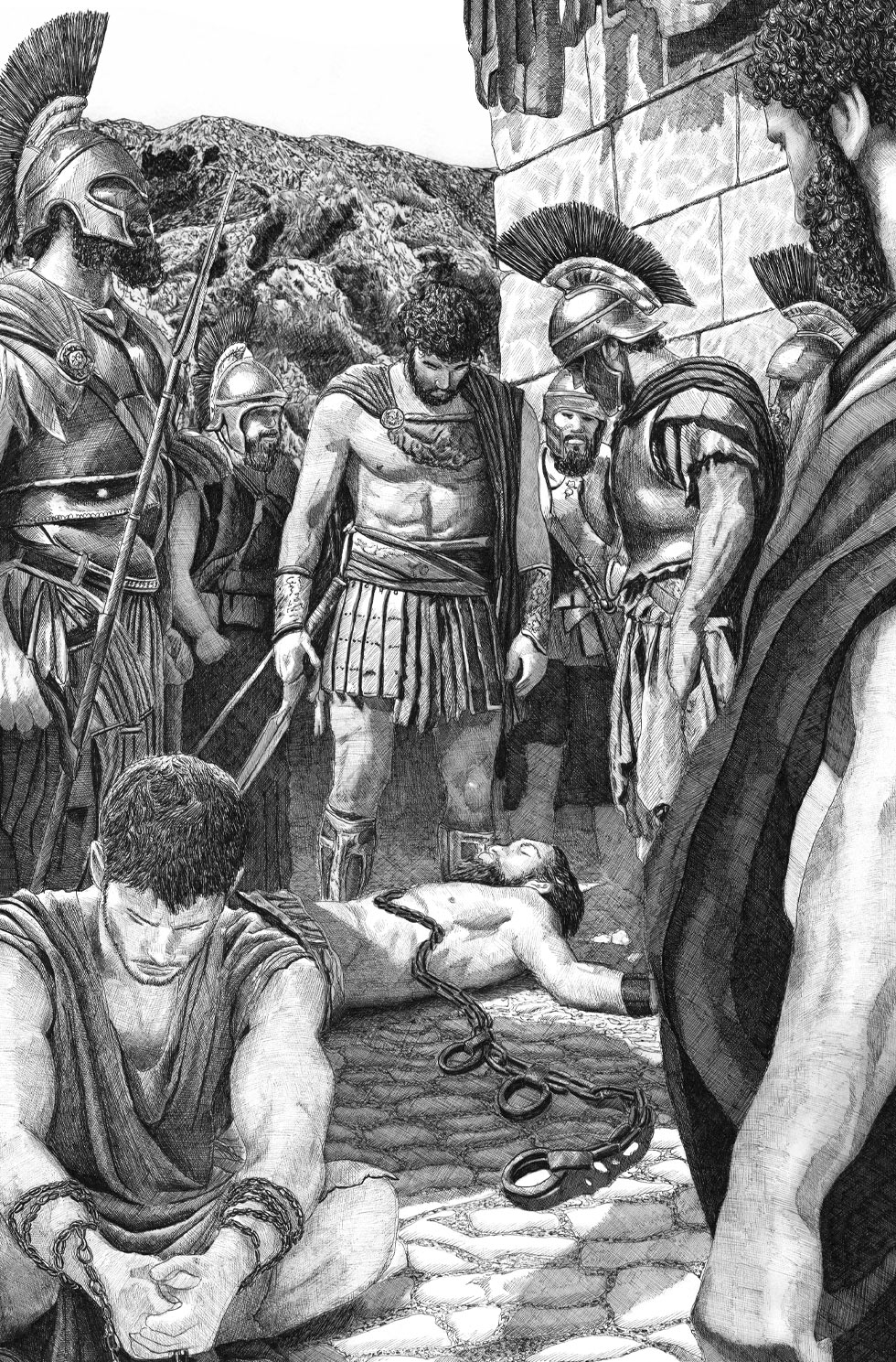
Sous le régime des « Trente Tyrans », Athènes sombre dans une période de répression. La scène montre des soldats arrêtant des hommes, avec un prisonnier gisant à terre et un autre, accroupi et enchaîné, illustrant l’inhumanité de ce régime autoritaire. Cette composition met en lumière une des périodes les plus sombres de l’histoire athénienne, marquée par la tyrannie.
⸻
Dessin XII – Le déclin
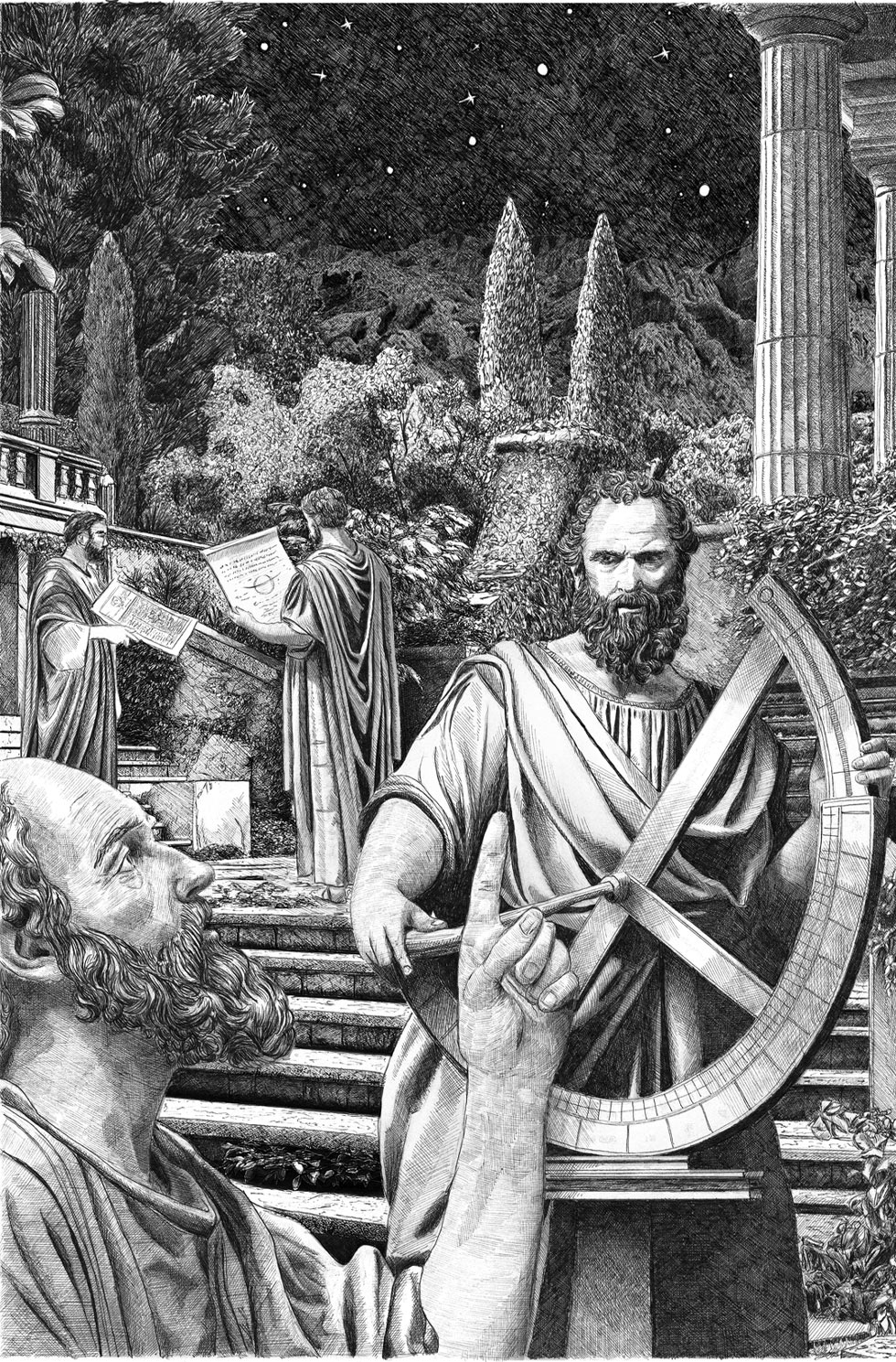
Dans un jardin paisible, des astronomes et des mathématiciens poursuivent leurs recherches, symboles d’un âge d’or scientifique. Un astronome lève le doigt vers le ciel, tandis qu’un autre, à droite, observe un cadran solaire en bois. En arrière-plan, Euclide et un autre mathématicien discutent, calculs à la main. Euclide, connu pour ses travaux sur la géométrie, a fondé les bases mathématiques modernes avec son ouvrage Les Éléments. Sa méthode rigoureuse et axiomatique a profondément influencé la science et la pensée logique pendant des siècles.
——————————————
PRESSE
Asimov tisse ainsi un réseau intéressant d’informations assez brutes, permettant au lecteur d’enrichissants allers-retours. Magnifiquement illustré par Benjamin Van Blancke, il montre l’apport de cette civilisation méditerranéenne à la nôtre.
La Liberté – 23/05/2025
Une bonne introduction à l’Antiquité grecque et un témoignage des approches scientifiques des années 1960
Beaux Arts Magazine – 01/07/2025
Avec une densité étonnante, Asimov ramène à l’essentiel l’épopée grecque. La grandeur austère de Sparte, la vivacité politique d’Athènes ou encore lesconquêtes foudroyantes d’Alexandre prennent ici une fraîcheur rare, sans longueurs inutiles. On salue, en outre, les illustrations de Benjamin Van Blancke, qui ponctuent ce récit compact d’un trait élégant, évocateur sans pittoresque superflu.
Le Figaro Histoire – 01/06/2025
Le illustrations de Benjamin Van Blancke sont tout simplement magnifiques. Son trait, précis et poétique, nous transporte dans le temps, nous fait sentir la chaleur du soleil grec, la fraîcheur de la mer Égée. Elles sont un écrin parfait pour le texte d’Asimov, un enchantement pour les yeux.
Hoirizonetinfini sur Instagram – 01/07/2025
https://www.lesbelleslettres.com/livre/9782251456959/les-grecs