lorem ipsum sit dolor ans a quest for design lorem ipsum dolor sit amet, consectetur adipiscing elit. in nisl enim, placerat et ultrices id, egestas a auge. donec iaculis iaculis aliqam. donec bibendum rhoncus.

Part I. LES GRECS / éditions Les Belles Lettres

Six premières illustrations du livre publié aux Belles Lettres

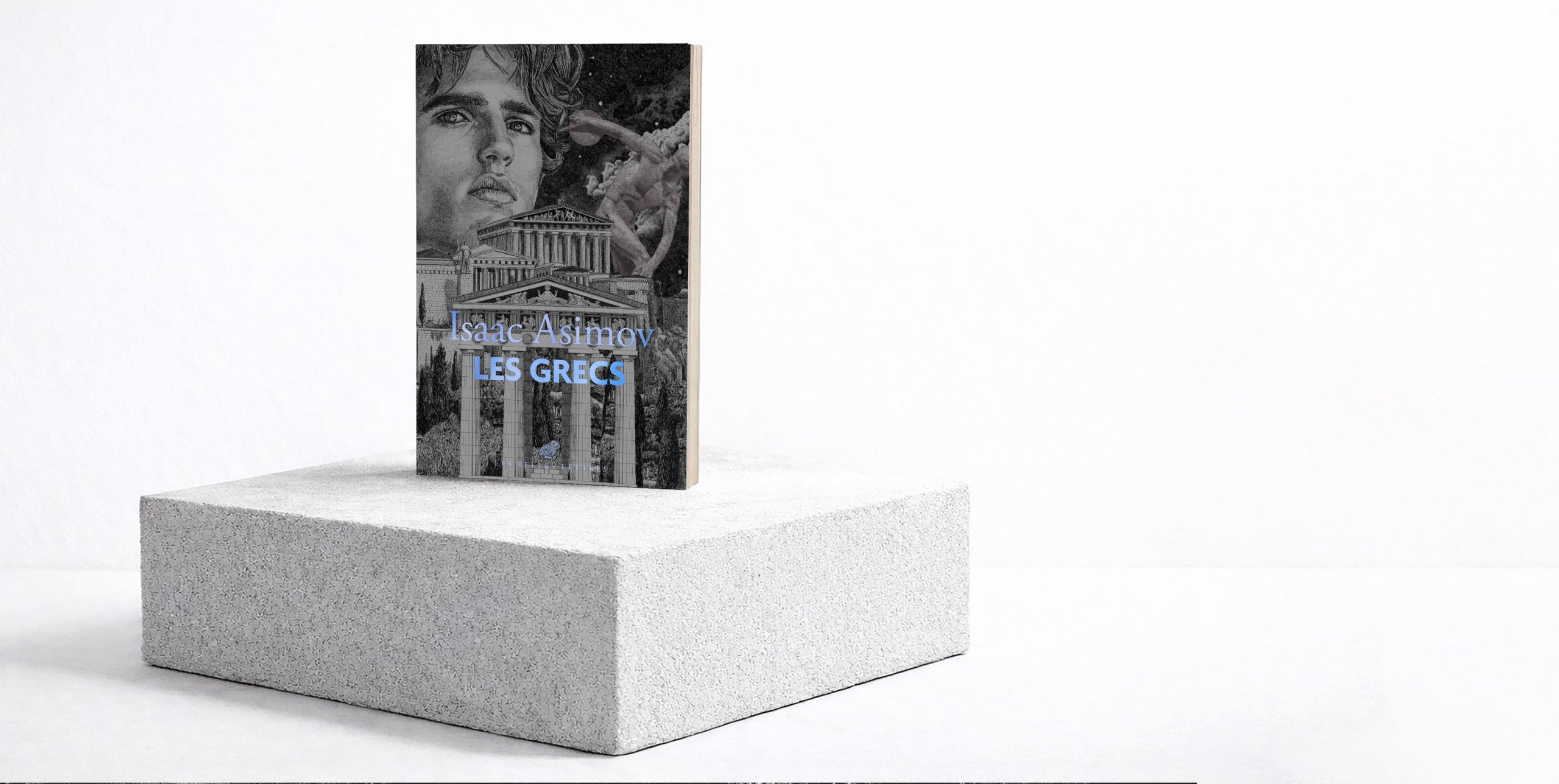
Dans Les Grecs, Isaac Asimov retrace l’histoire fondatrice du monde grec en la plaçant, dès l’origine, dans une tension permanente entre deux rives: l’Europe et l’Asie.

Depuis les premiers mythes jusqu’aux grands bouleversements politiques, l’épopée grecque se construit dans l’affrontement (Grèce et Troie, Grèce et Perse, Grèce et Empire ottoman) un conflit de civilisations qui se prolonge au fil des siècles.

Les six dessins présentés ici illustrent les premiers chapitres du livre. Chacun d’eux propose une reconstitution visuelle rigoureuse, nourrie par les sources historiques et archéologiques, tout en laissant place à une interprétation graphique sensible.

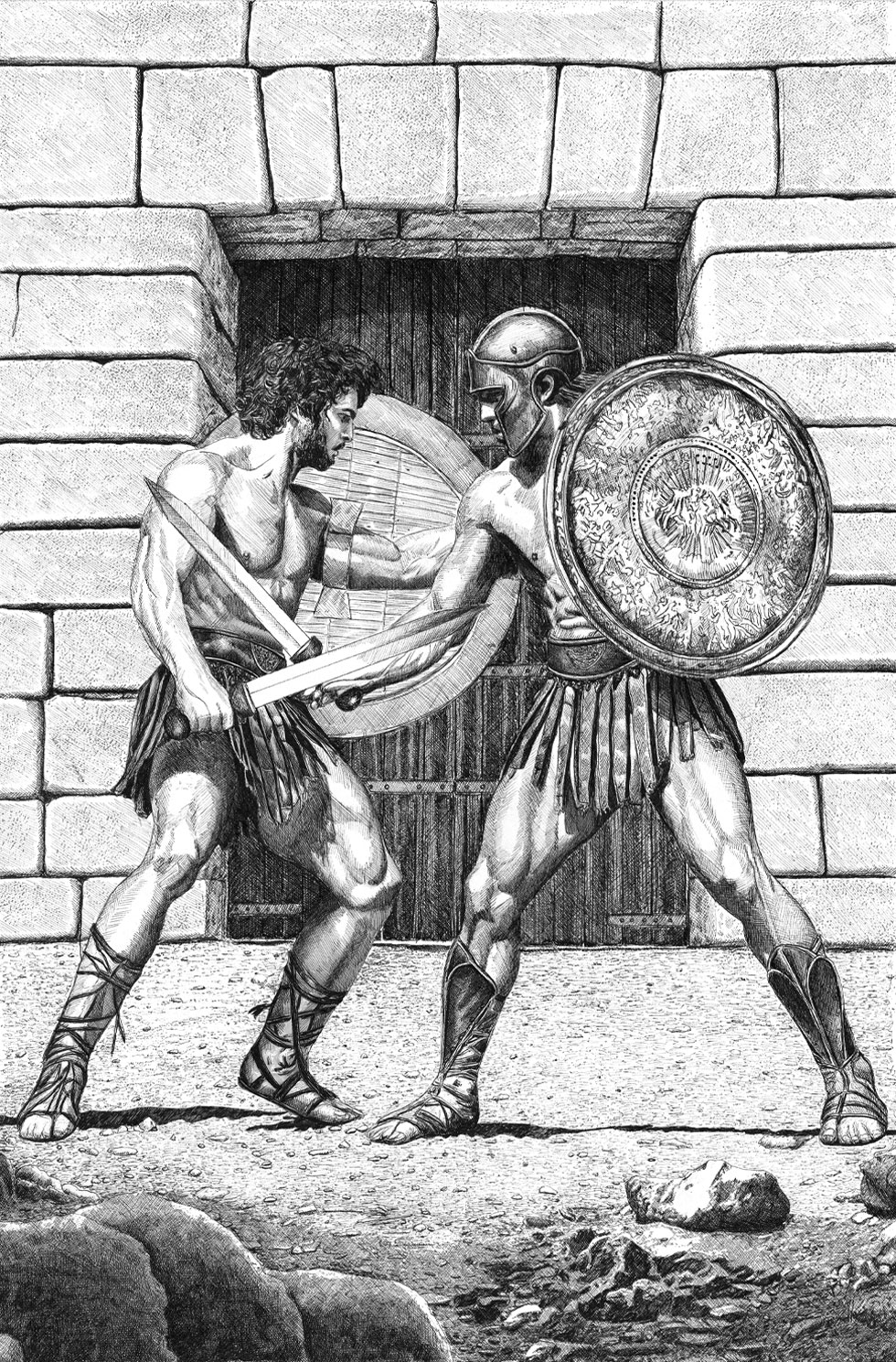
Dessin I – L’ère mycénienne

Cette illustration représente un moment emblématique de L’Iliade d’Homère : le combat d’Achille et d’Hector devant les murailles de Troie.

Achille, à gauche, se distingue par son casque doré, tandis qu’Hector lui fait face à droite. Le bouclier d’Achille, richement décoré, s’inspire de la description célèbre de l’épopée : une œuvre forgée par Héphaïstos, où se déploient le cosmos et la vie des hommes. Il incarne la splendeur et la maîtrise artistique de l’art militaire mycénien.

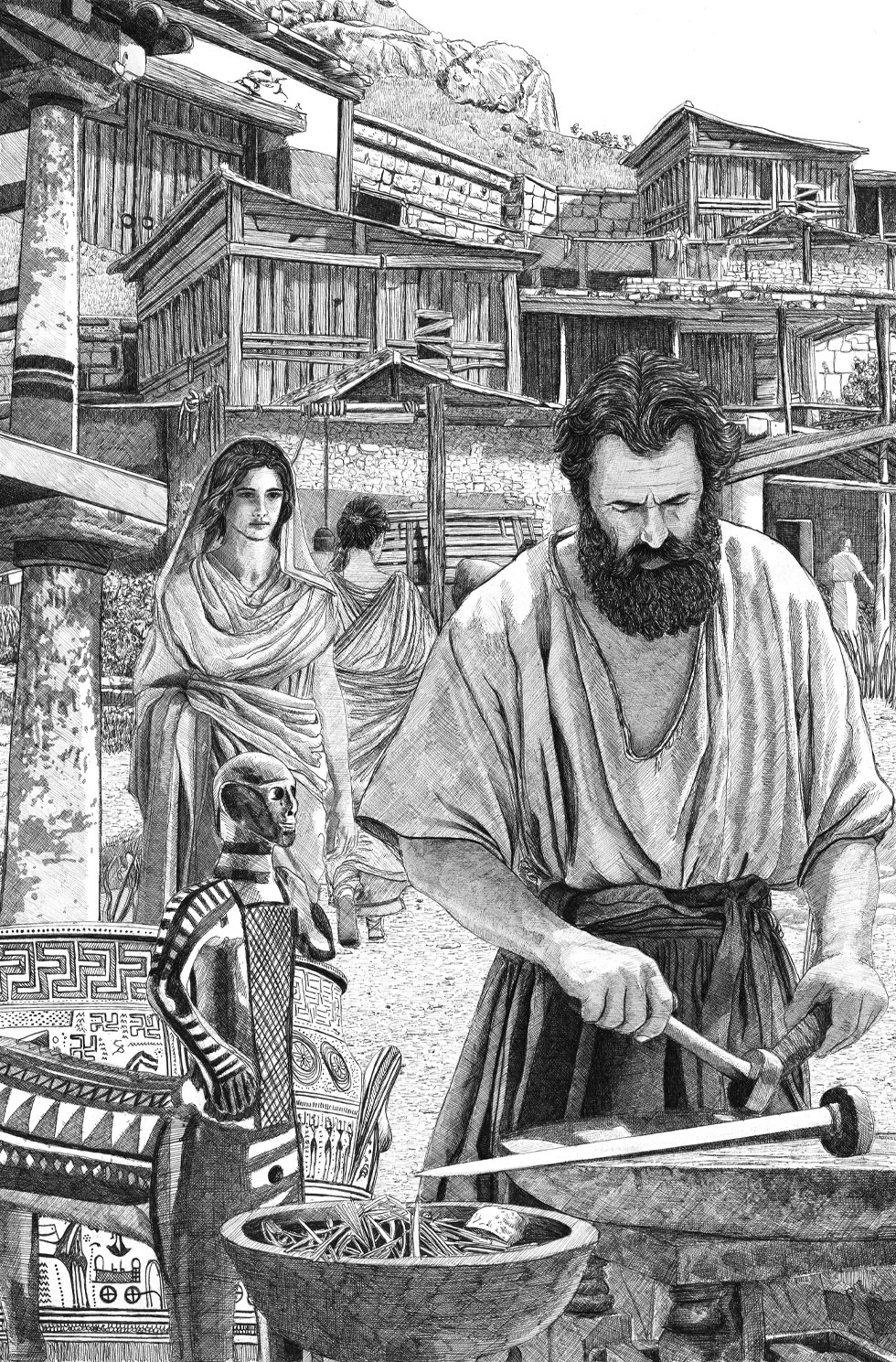
Dessin II – L’âge du fer

Une cité-État grecque archaïque s’étend sous le regard. Les maisons en bois, les remparts primitifs et une ruelle animée composent une scène de vie quotidienne.

Au premier plan, un forgeron façonne une arme, entouré de fragments de fer, symbole d’un savoir-faire nouveau. À ses côtés, un vase et une céramique figurant le centaure Chiron de Lefkandi évoquent les productions emblématiques de cette période de transition.

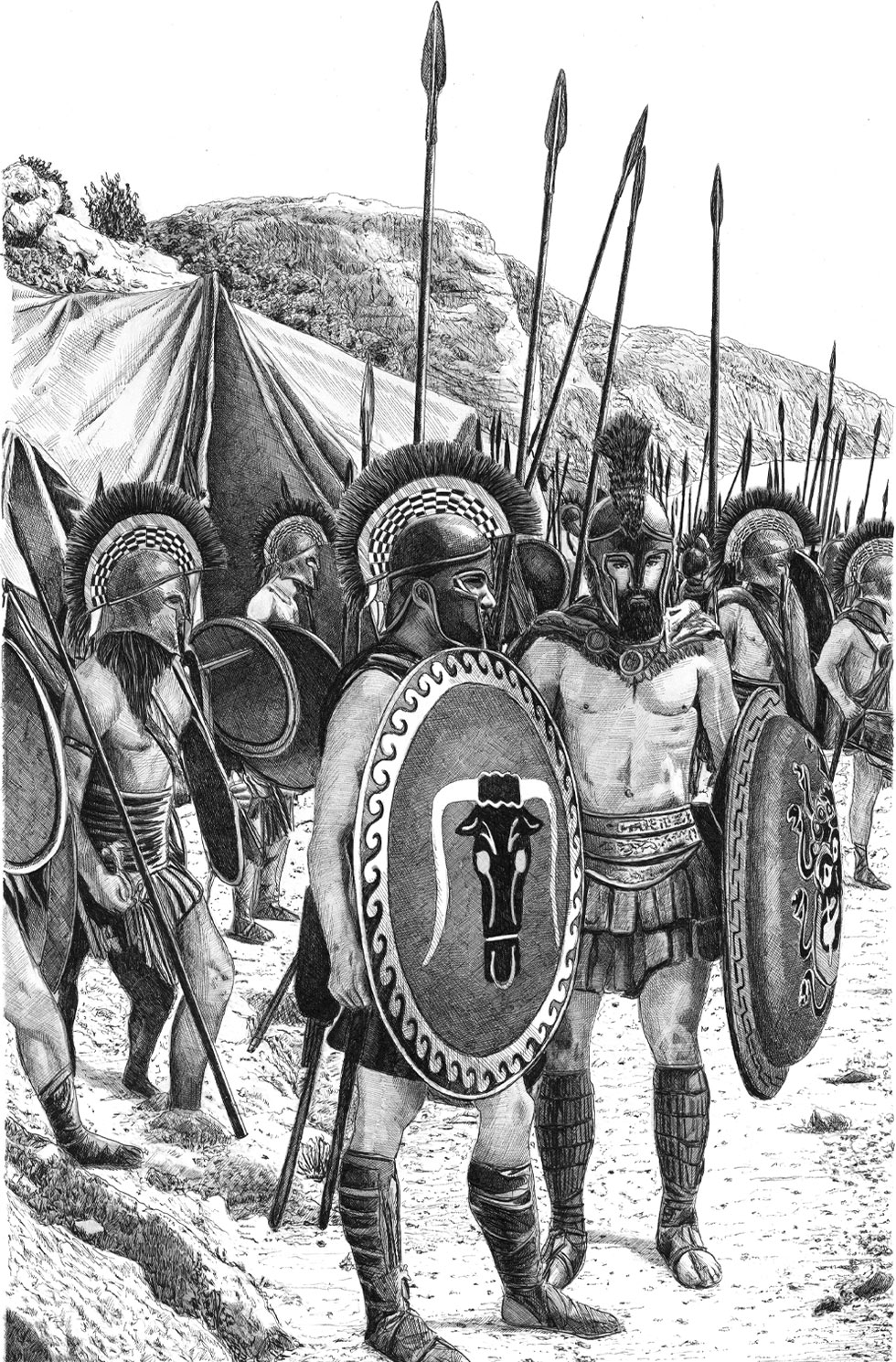
Dessin III – L’âge de la colonisation

En bord de Méditerranée, un campement de mercenaires grecs prend forme. Tentes et abris provisoires témoignent de la mobilité de ces guerriers.

Les hoplites, revêtus de leurs armures complètes, portent casques corinthiens, boucliers décorés et lances soigneusement disposées. Chaque détail(du métal brillant sous le soleil aux armes alignées) souligne la discipline et la puissance de l’armée grecque naissante.

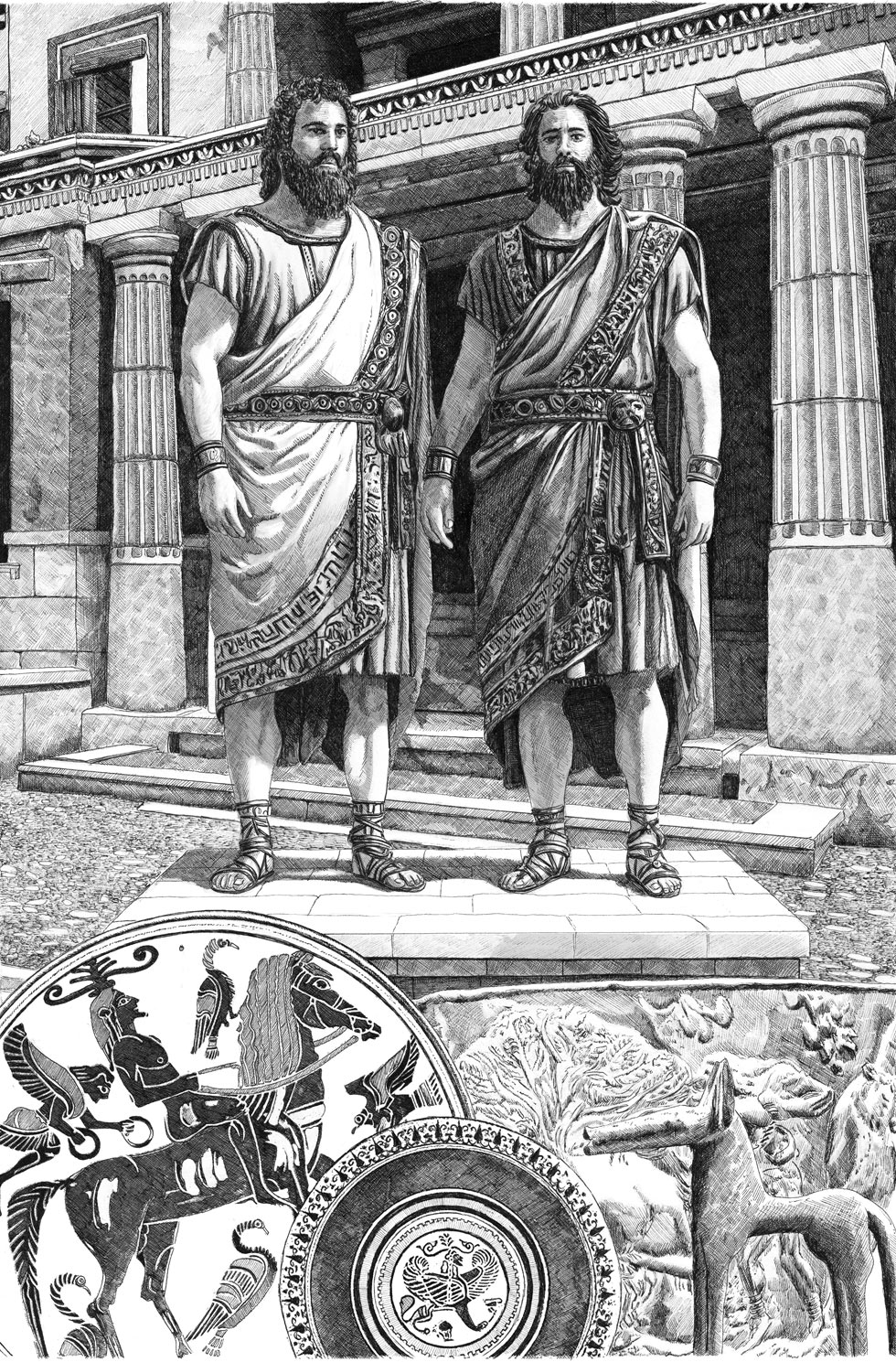
Dessin IV — L’ascension de Sparte

Les deux rois de Sparte, incarnant la dyarchie spartiate, se tiennent sur un podium de pierre, représentant les lignées des Agiades et des Eurypontides.

Derrière eux, un palais volontairement sobre domine la scène. Autour, plusieurs objets d’art spartiates (coupe en or de Vaphio, cheval en bronze de style laconien, vaisselle finement ouvragée) rappellent une richesse culturelle souvent éclipsée par la seule image guerrière de la cité.

dessin V – L’âge des tyrans

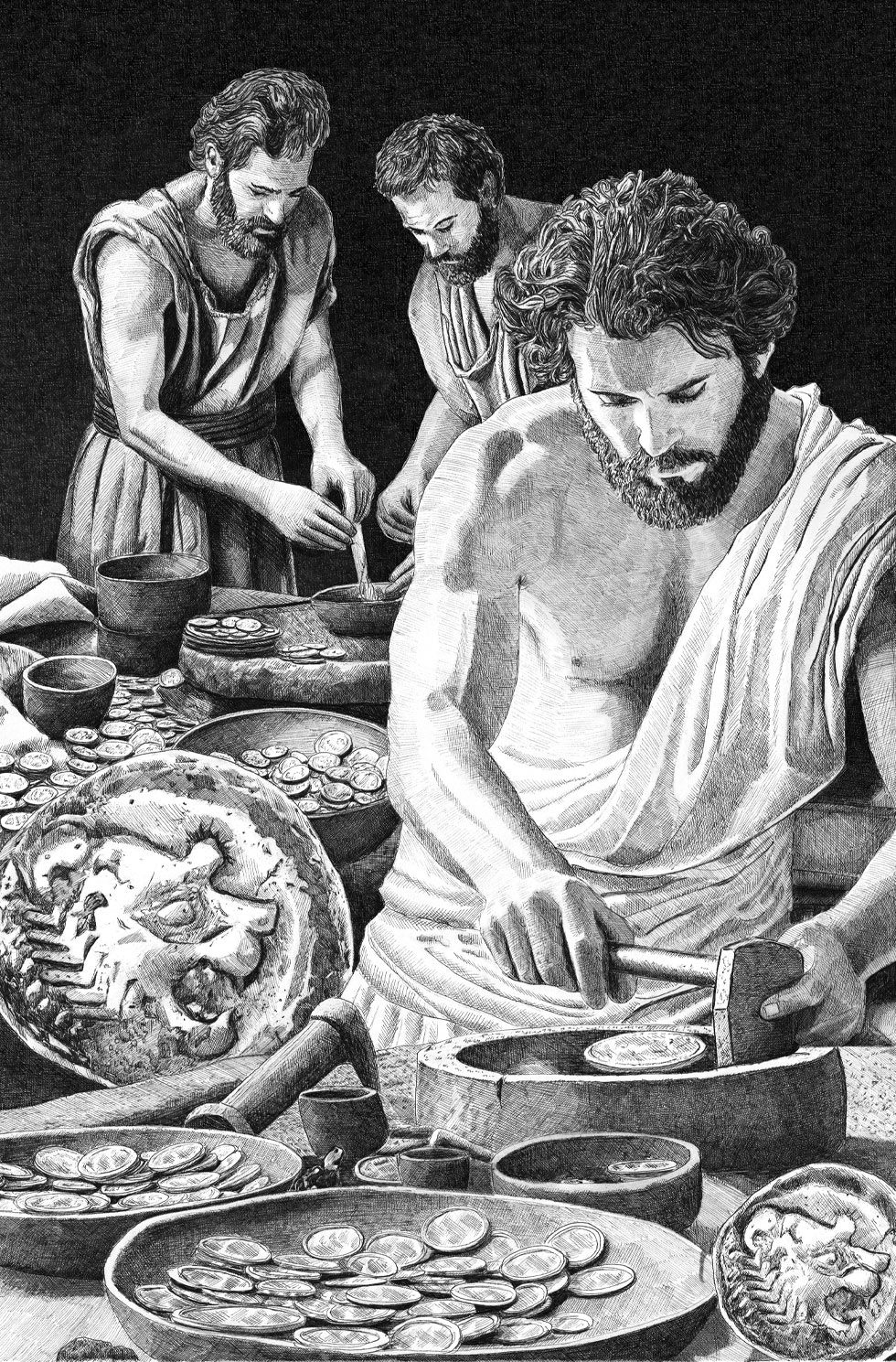
Dans un atelier modeste, des artisans frappent des pièces de monnaie. Fours, outils et moules témoignent de la naissance d’un nouveau pouvoir : celui de la monnaie.

Au premier plan, les premières pièces de Lydie, ornées du lion, symbolisent l’apparition d’un instrument politique et économique majeur dans l’histoire du monde grec.

Dessin VI – L’ascension d’Athènes

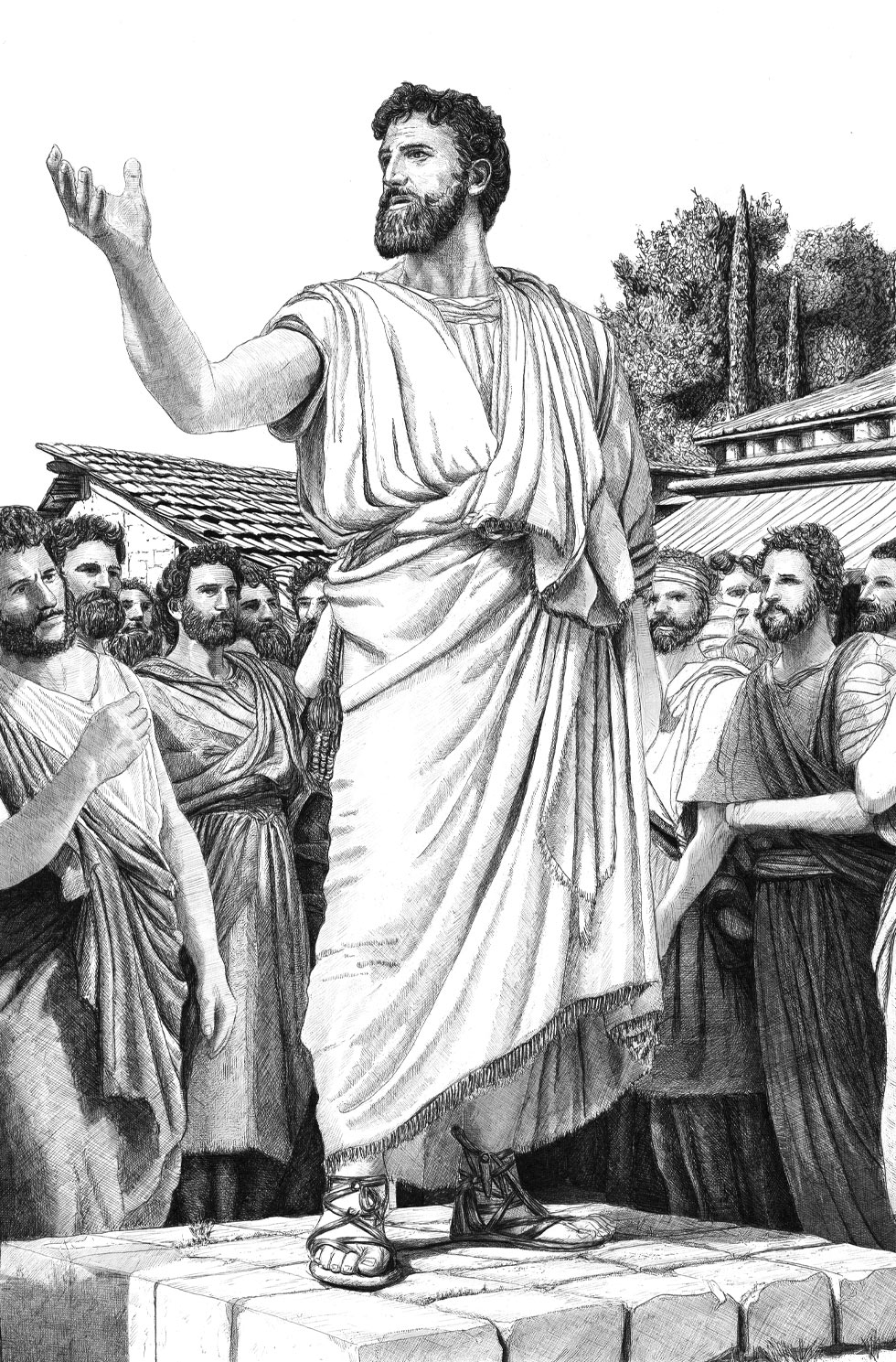
Clisthène s’adresse au peuple athénien depuis une plateforme de pierre. Vêtu simplement, il expose ses réformes démocratiques avec éloquence.

Face à lui, les citoyens, drapés dans leurs chitons, écoutent attentivement. Le décor d’Athènes reste volontairement dépouillé, sans monuments postérieurs, afin de restituer fidèlement l’atmosphère de la cité à l’aube de la démocratie.

——————————————

PRESSE

Asimov tisse ainsi un réseau intéressant d’informations assez brutes, permettant au lecteur d’enrichissants allers-retours. Magnifiquement illustré par Benjamin Van Blancke, il montre l’apport de cette civilisation méditerranéenne à la nôtre.

La Liberté – 23/05/2025

Une bonne introduction à l’Antiquité grecque et un témoignage des approches scientifiques des années 1960

Beaux Arts Magazine – 01/07/2025

Avec une densité étonnante, Asimov ramène à l’essentiel l’épopée grecque. La grandeur austère de Sparte, la vivacité politique d’Athènes ou encore lesconquêtes foudroyantes d’Alexandre prennent ici une fraîcheur rare, sans longueurs inutiles. On salue, en outre, les illustrations de Benjamin Van Blancke, qui ponctuent ce récit compact d’un trait élégant, évocateur sans pittoresque superflu.

Le Figaro Histoire – 01/06/2025

Le illustrations de Benjamin Van Blancke sont tout simplement magnifiques. Son trait, précis et poétique, nous transporte dans le temps, nous fait sentir la chaleur du soleil grec, la fraîcheur de la mer Égée. Elles sont un écrin parfait pour le texte d’Asimov, un enchantement pour les yeux.

Hoirizonetinfini sur Instagram – 01/07/2025


https://www.lesbelleslettres.com/livre/9782251456959/les-grecs

Production of several illustrations for the magazine L’Hémicycle on the theme of the Palais Bourbon, home of the President of the French National Assembly.

Six first illustrations from the book published by Les Belles Lettres

In The Greeks, Isaac Asimov retraces the foundational history of the Greek world by placing it, from the very beginning, within a constant tension between two shores: Europe and Asia.

From the earliest myths to major political upheavals, the Greek epic is shaped through confrontation (Greece and Troy, Greece and Persia, Greece and the Ottoman Empire), a clash of civilizations that extends across the centuries.

The six drawings presented here illustrate the opening chapters of the book. Each one offers a rigorous visual reconstruction, informed by historical and archaeological sources, while allowing room for a sensitive graphic interpretation.

Drawing I — The Mycenaean Era

This illustration depicts an emblematic moment from Homer’s Iliad: the combat between Achilles and Hector before the towering walls of Troy.

Achilles, on the left, is distinguished by his golden helmet, while Hector faces him on the right. Achilles’ shield, richly decorated, is inspired by the famous description in the epic: a work forged by Hephaestus, unfolding the cosmos and the life of humankind. It embodies the splendor and artistic mastery of Mycenaean military art.

Drawing II — The Iron Age

An archaic Greek city-state unfolds before the viewer. Wooden houses, primitive fortifications, and a lively alleyway form a scene of everyday life.

In the foreground, a blacksmith shapes a weapon, surrounded by fragments of iron, symbolizing newly acquired technical knowledge. Beside him, a vase and a ceramic depicting the centaur Chiron of Lefkandi evoke the emblematic productions of this transitional period.

Drawing III — The Age of Colonization

On the shores of the Mediterranean, a camp of Greek mercenaries takes shape. Tents and makeshift shelters testify to the mobility of these warriors.

The hoplites, clad in full armor, wear Corinthian helmets and carry decorated shields and carefully arranged spears. Every detail (from metal gleaming in the sun to the aligned weapons) underscores the discipline and strength of the emerging Greek army.

Drawing IV — The Rise of Sparta

The two kings of Sparta, embodying the Spartan dyarchy, stand proudly on a stone platform, representing the royal lineages of the Agiads and the Eurypontids.

Behind them, a deliberately austere palace dominates the scene. Surrounding them, several remarkable Spartan works of art (the gold cup of Vaphio, a bronze horse in the Laconian style, finely crafted tableware) recall a cultural richness often overshadowed by the city’s purely military image.

Drawing V — The Age of the Tyrants

In a modest workshop, craftsmen strike coins. Furnaces, tools, and molds bear witness to the emergence of a new form of power: that of money.

In the foreground, the earliest Lydian coins, adorned with the lion, symbolize the birth of a major political and economic instrument in the history of the Greek world.

Drawing VI — The Rise of Athens

Cleisthenes addresses the Athenian people from a stone platform. Simply dressed, he presents his democratic reforms with eloquence.

Before him, citizens draped in chitons listen attentively. The setting of Athens remains deliberately sparse, without later monuments, in order to faithfully restore the atmosphere of the city at the dawn of democracy.

——————————————

PRESS

Asimov thus weaves an engaging network of fairly raw information, allowing the reader for enriching back-and-forth reflections. Magnificently illustrated by Benjamin Van Blancke, the book highlights the contribution of this Mediterranean civilization to our own.

La Liberté — 23/05/2025

A solid introduction to Greek Antiquity and a testimony to the scientific approaches of the 1960s.

Beaux Arts Magazine — 01/07/2025

With remarkable density, Asimov brings the Greek epic back to its essentials. The austere grandeur of Sparta, the political vitality of Athens, and the lightning-fast conquests of Alexander all acquire a rare freshness here, free of unnecessary digressions. Special praise must also be given to the illustrations by Benjamin Van Blancke, which punctuate this compact narrative with an elegant line—evocative without superfluous picturesque detail.

Le Figaro Histoire — 01/06/2025

The illustrations by Benjamin Van Blancke are simply magnificent. His precise and poetic line transports us through time, making us feel the warmth of the Greek sun and the coolness of the Aegean Sea. They are a perfect setting for Asimov’s text, a true enchantment for the eyes.

Horizonetinfini on Instagram — 01/07/2025