Publishing
The Egyptians, part II
Éditions Les Belles Lettres, 2026
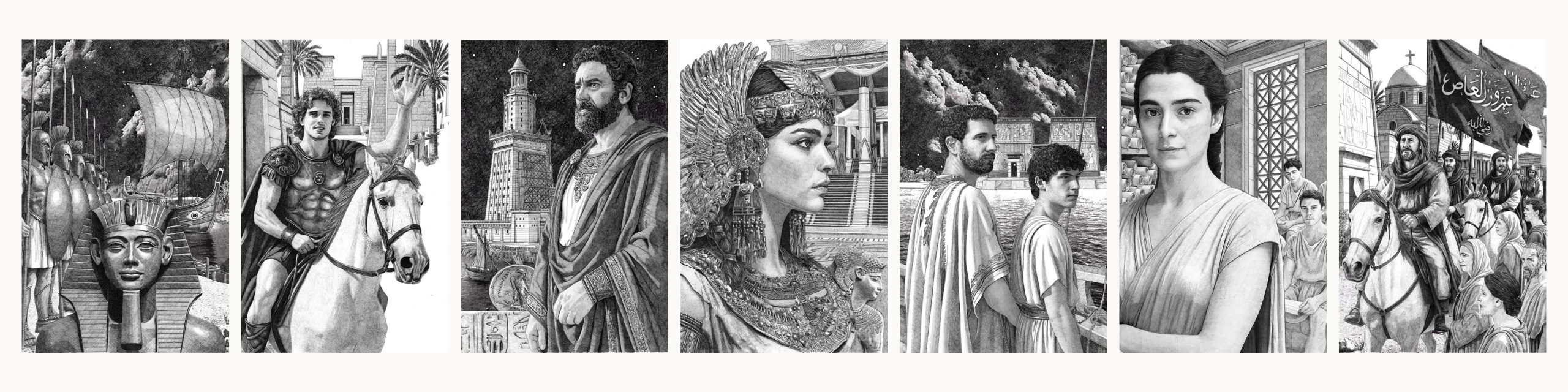
Illustrations for Isaac Asimov’s Les Égyptiens, Éditions Les Belles Lettres, 2026: seven illustrations shown out of the fourteen created for the book
This second part presents the last seven illustrations created for Les Égyptiens, published in 2026 by Éditions Les Belles Lettres, the fourth book I have illustrated in this series. After a first set devoted to the origins of Egyptian civilisation and the great pharaonic periods, these new compositions carry the story on from Saite Egypt to the Arab conquest in the seventh century.
As in the first part, each drawing sums up a period through its figures, its architecture and its symbols, blending historical research with graphic interpretation.
Chapter VIII, Saite Egypt
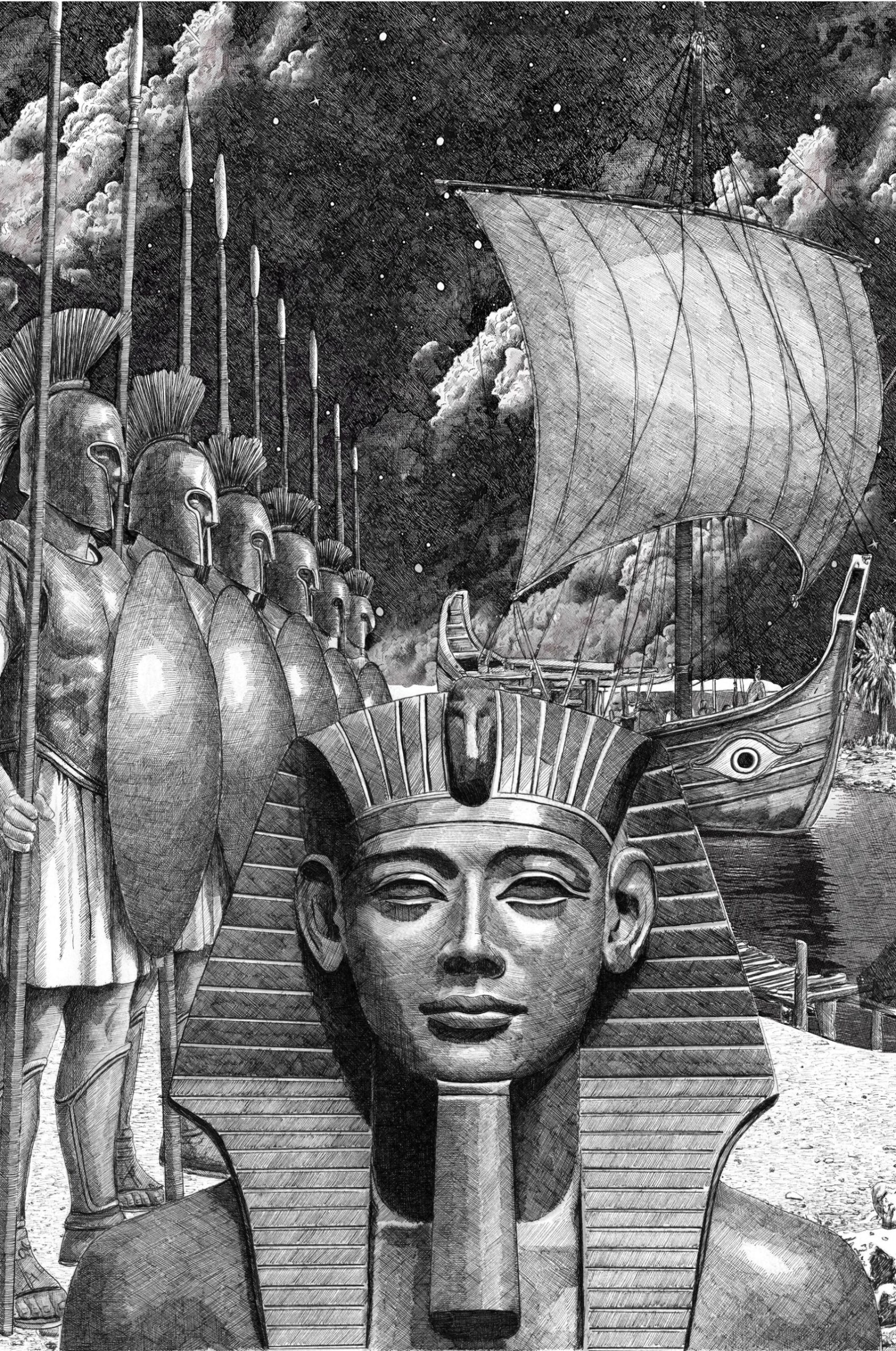
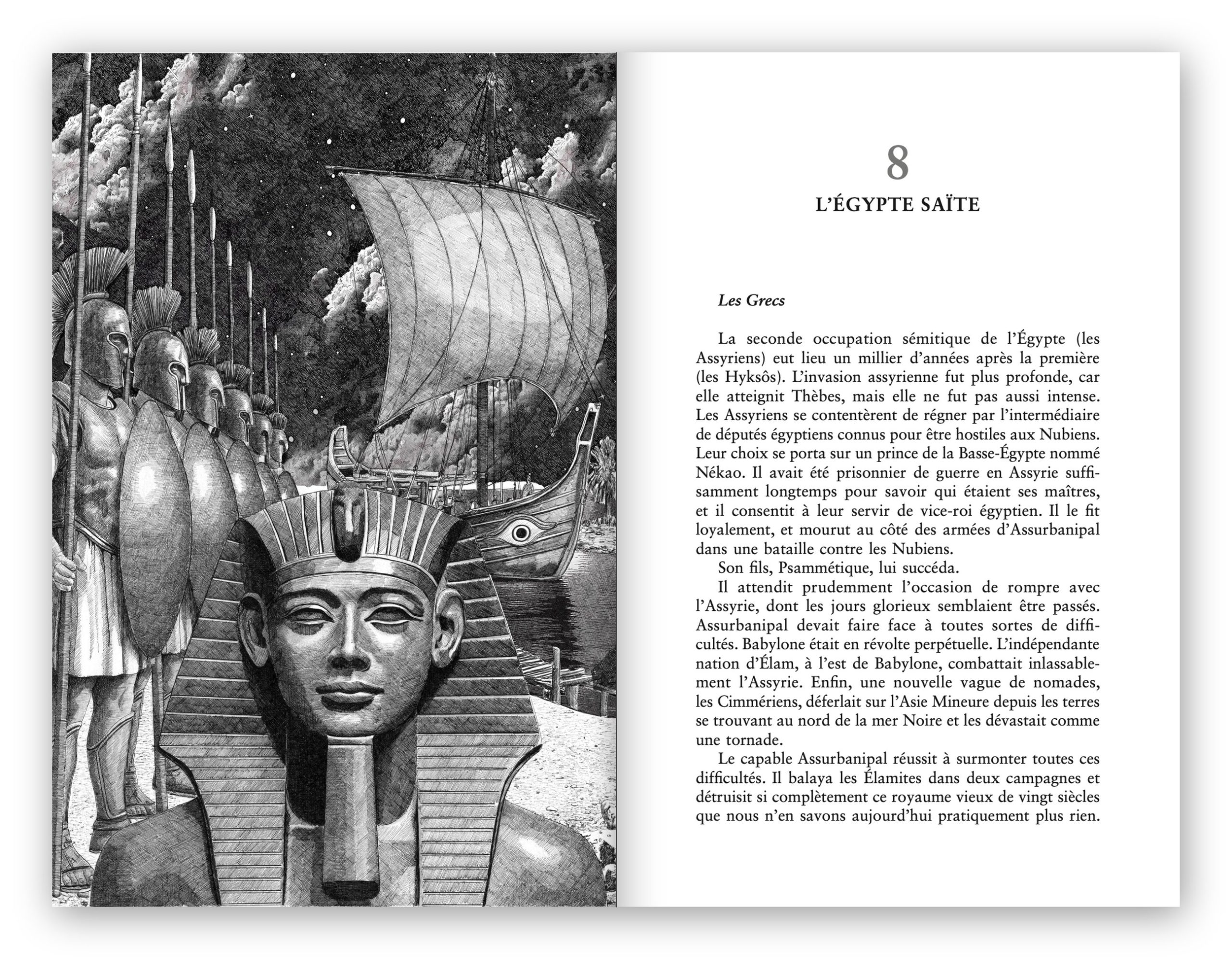
Under Psamtik I, Egypt experienced a political revival and opened up further to the Mediterranean world. In the foreground, the pharaoh is inspired by a portrait of a Twenty-sixth Dynasty ruler held at the Metropolitan Museum of Art. On the left, Greek mercenaries recall the growing role of these fighters in the Egyptian army. On the right, a Greek ship landing on the Nile evokes commercial and cultural exchange. The scene is imagined near Naukratis, the trading post that embodied this encounter between Egypt and the Greek world.
Chapter IX, Persian Egypt
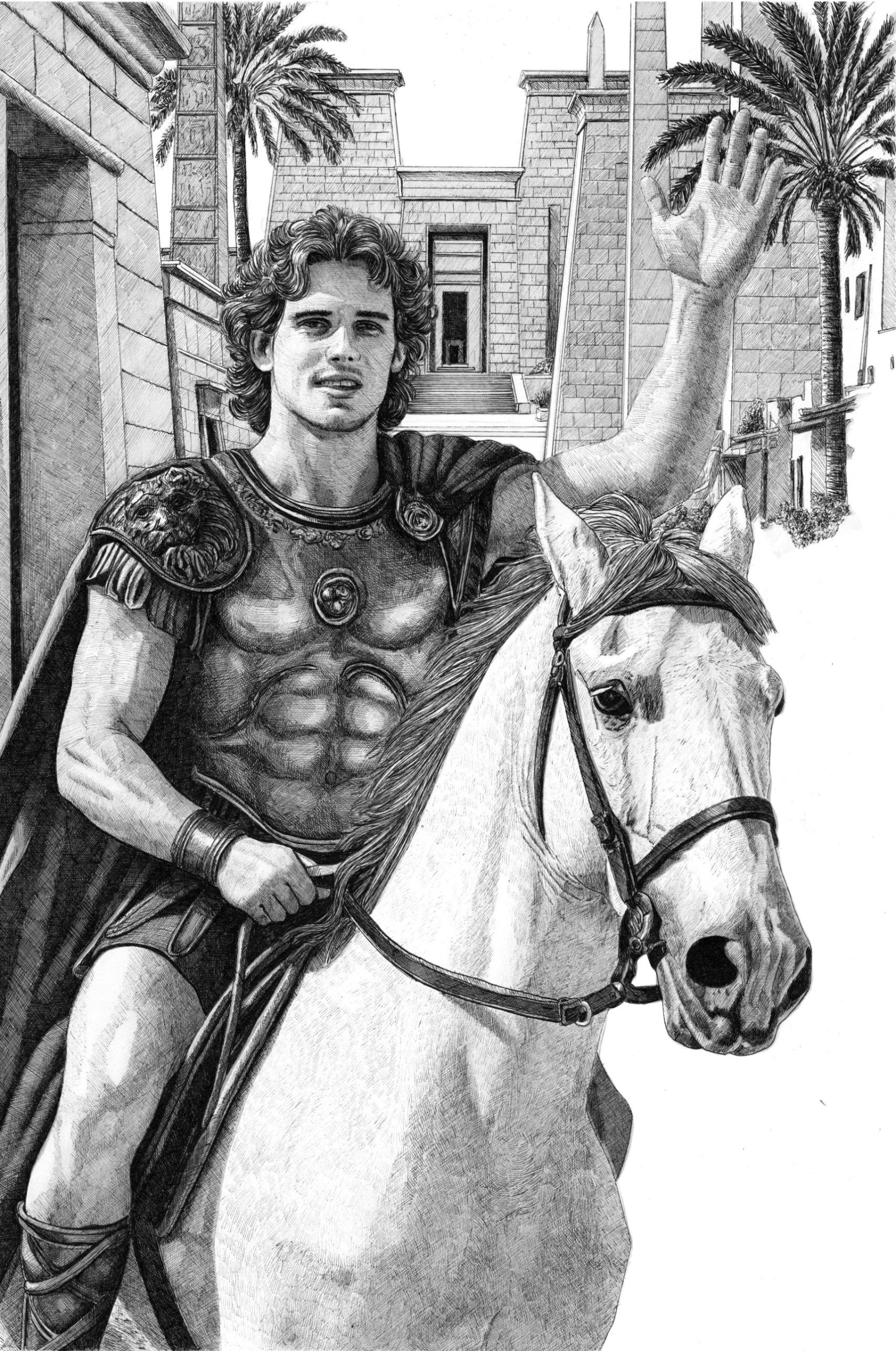
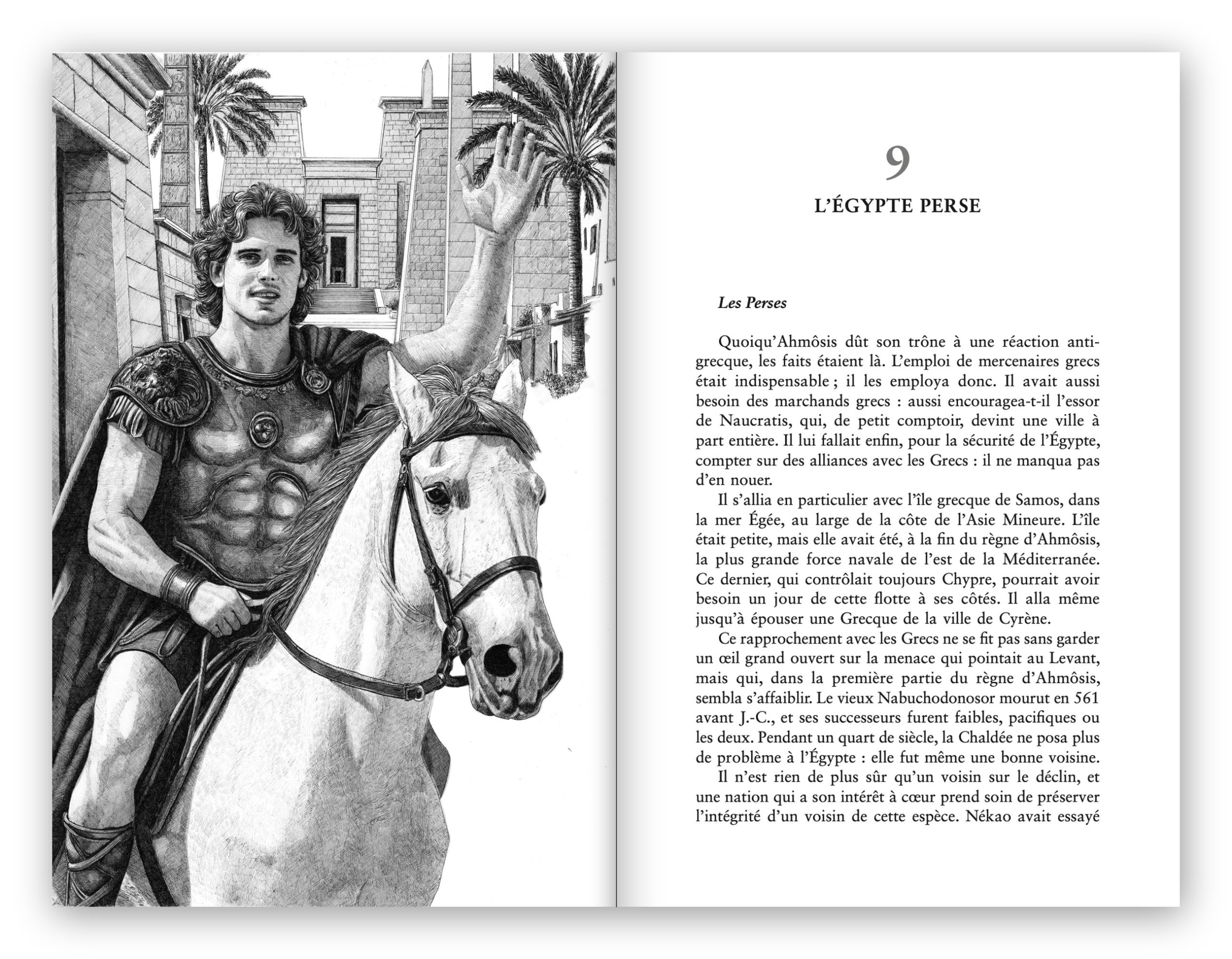
Alexander the Great entered Egypt in 332 BC, ending Persian rule and opening a new period in its history. I depicted him riding Bucephalus into an idealised Egyptian city dominated by a temple. The meeting of the Macedonian conqueror and pharaonic architecture symbolises the encounter between two worlds and heralds the founding of Alexandria and Egypt’s entry into the Hellenistic world.
Chapter X, The Ptolemies
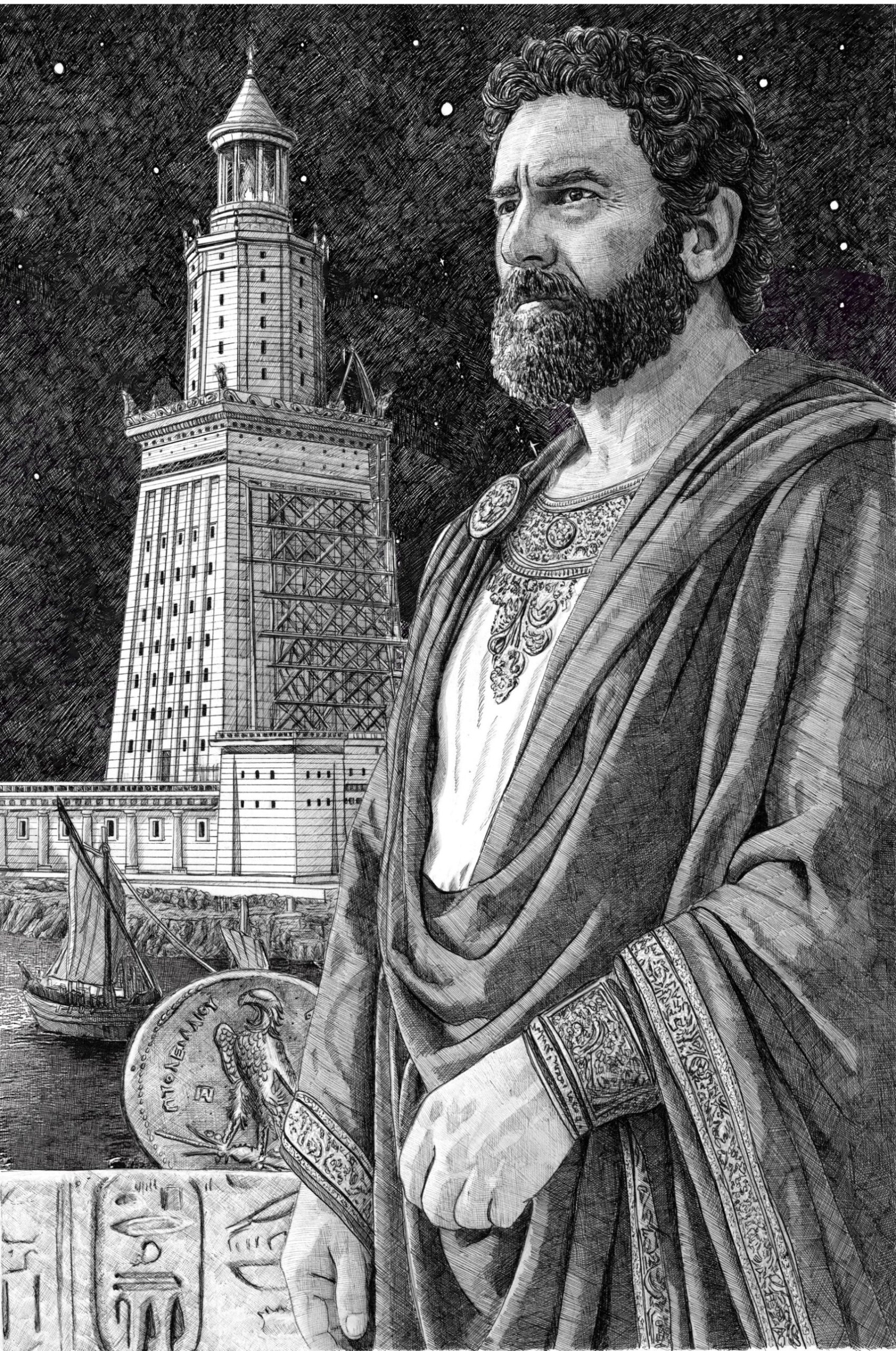
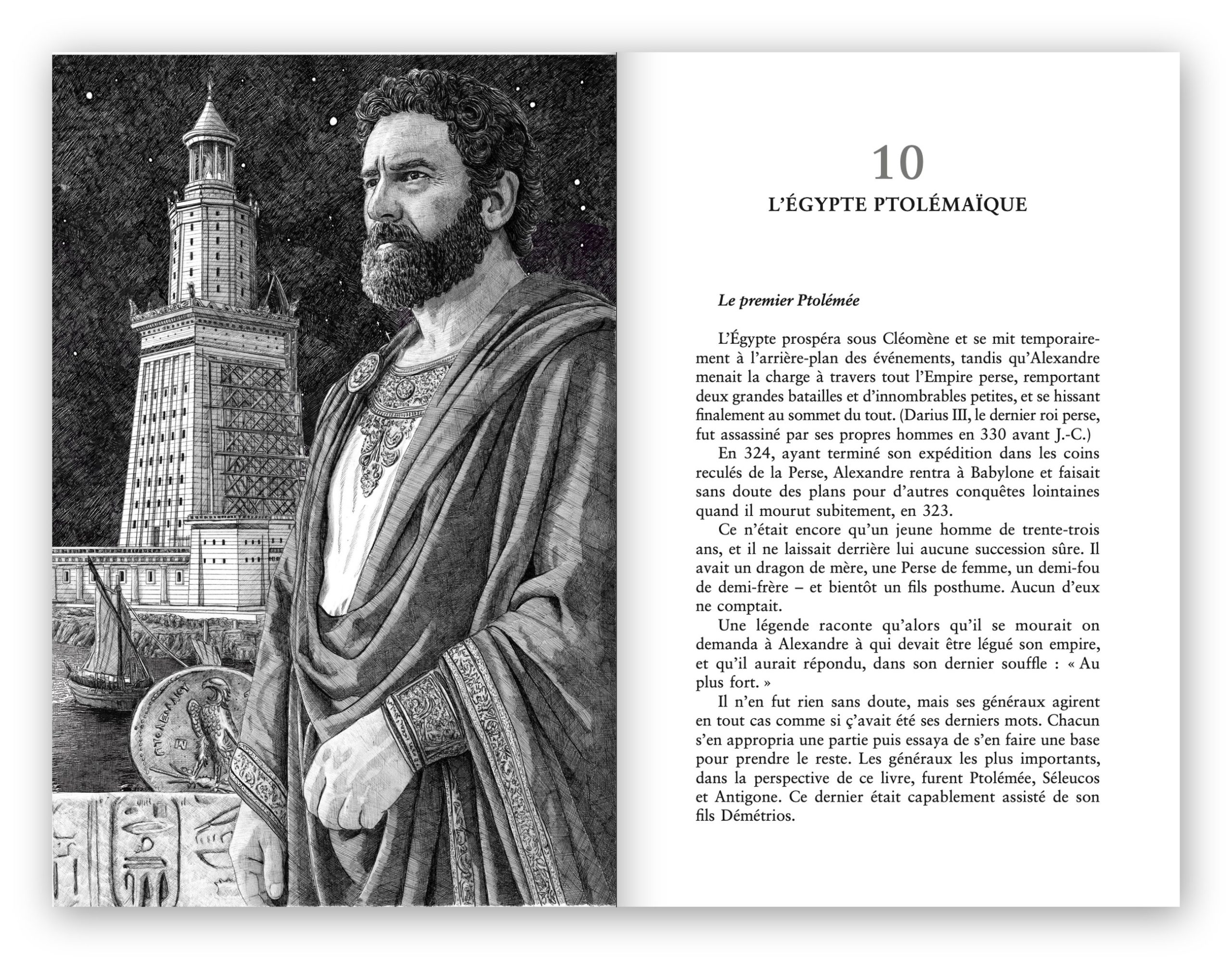
Ptolemy I gazes over Alexandria and its monumental lighthouse, shown here under construction. Around him, the bustle of the harbour and the merchant ships evoke the commercial power of the new capital. A stele bearing his cartouche and a coin from his reign complete the composition. The portrait of the king is a free interpretation, notably in the beard, which is absent from his known historical depictions.
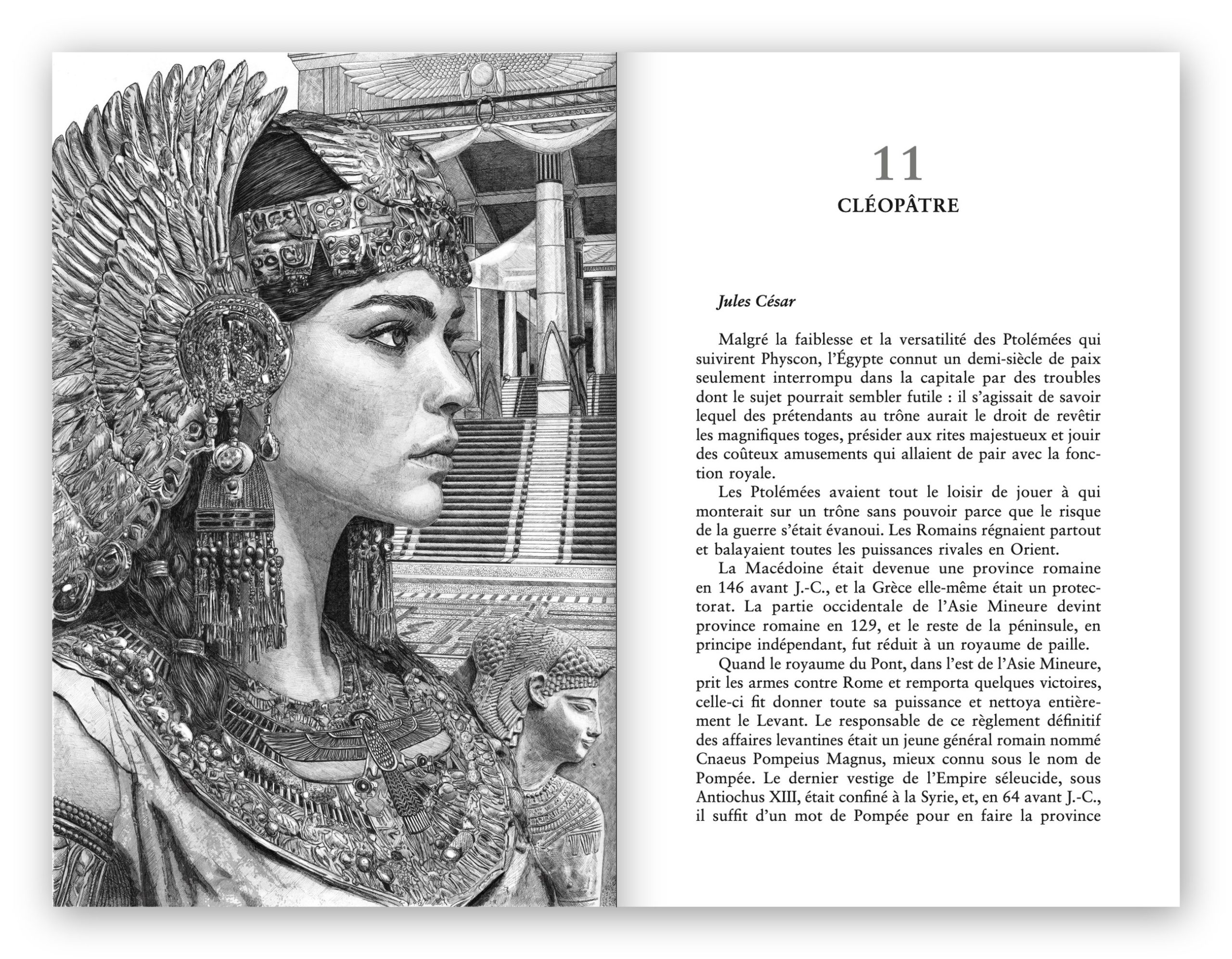
Chapter XI, Cleopatra
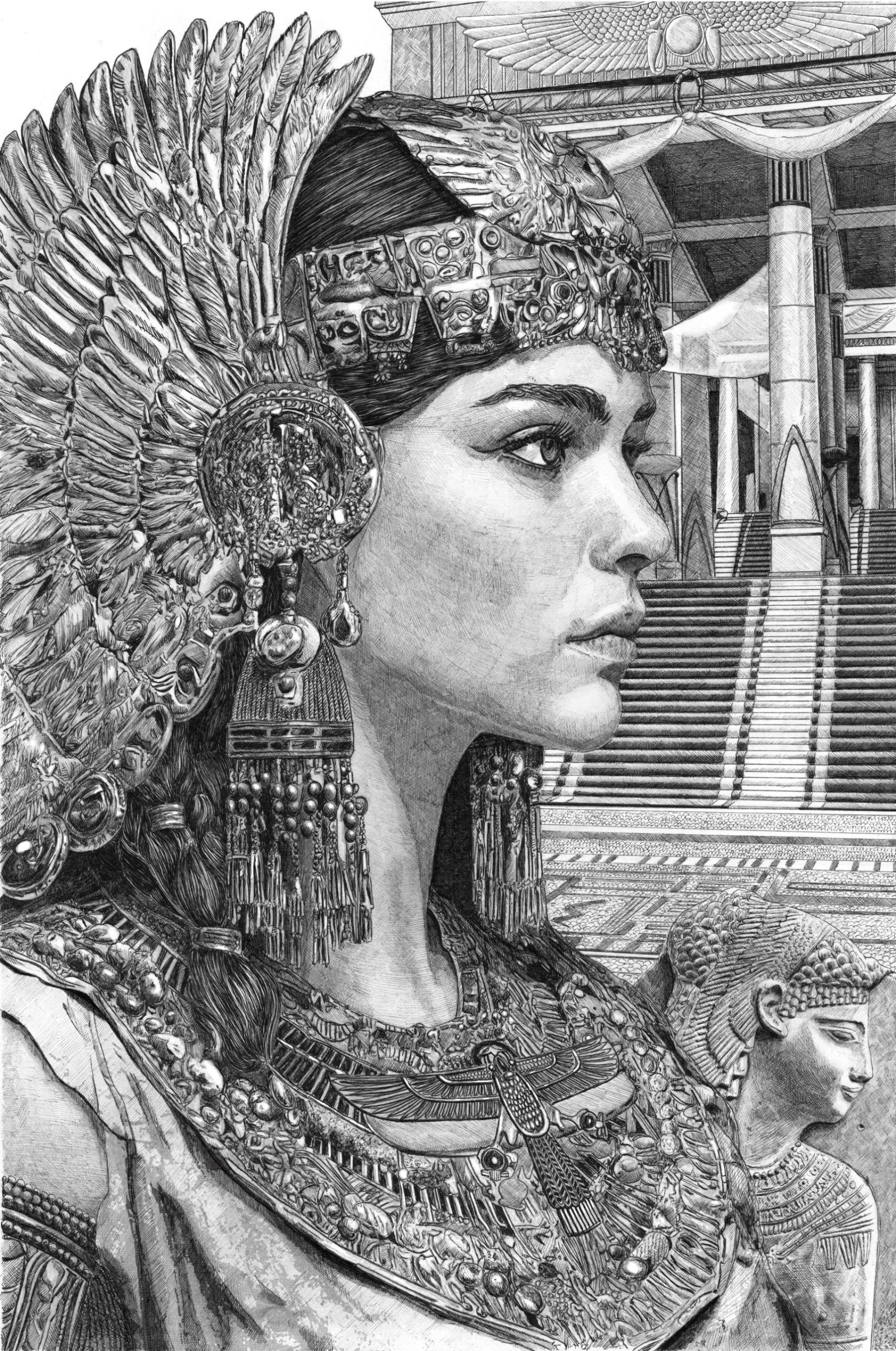
Cleopatra dominates the composition in a deliberately majestic portrait. I depicted her as a queen of Greek descent, with Mediterranean features. Her headdress is a personal interpretation inspired by a Ptolemaic-era relief, which also appears in the drawing. The palace of Alexandria rises in the background. Here I chose to work on the border between history and collective imagination, giving Cleopatra the iconic stature her figure has gained over the centuries.
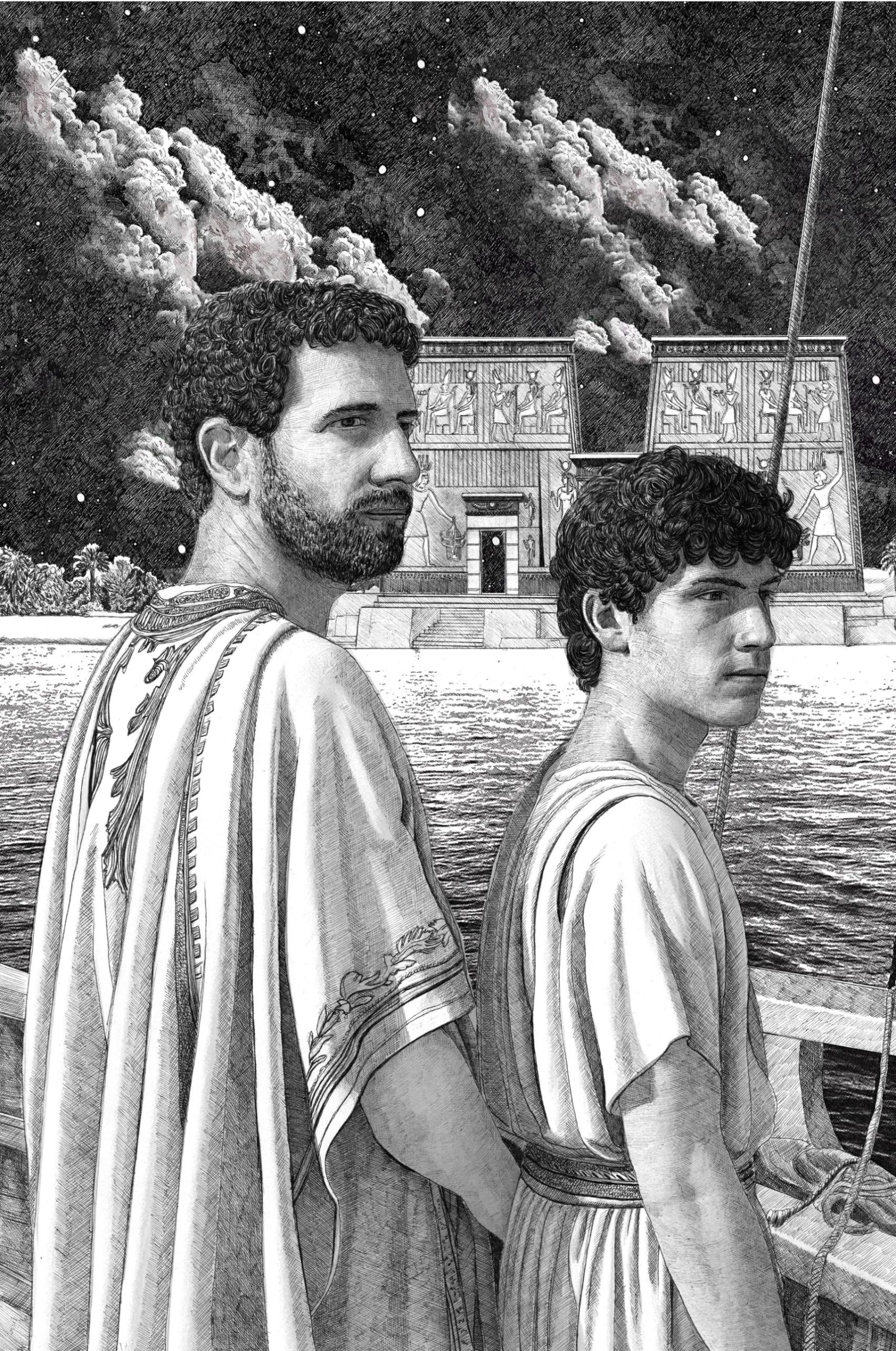
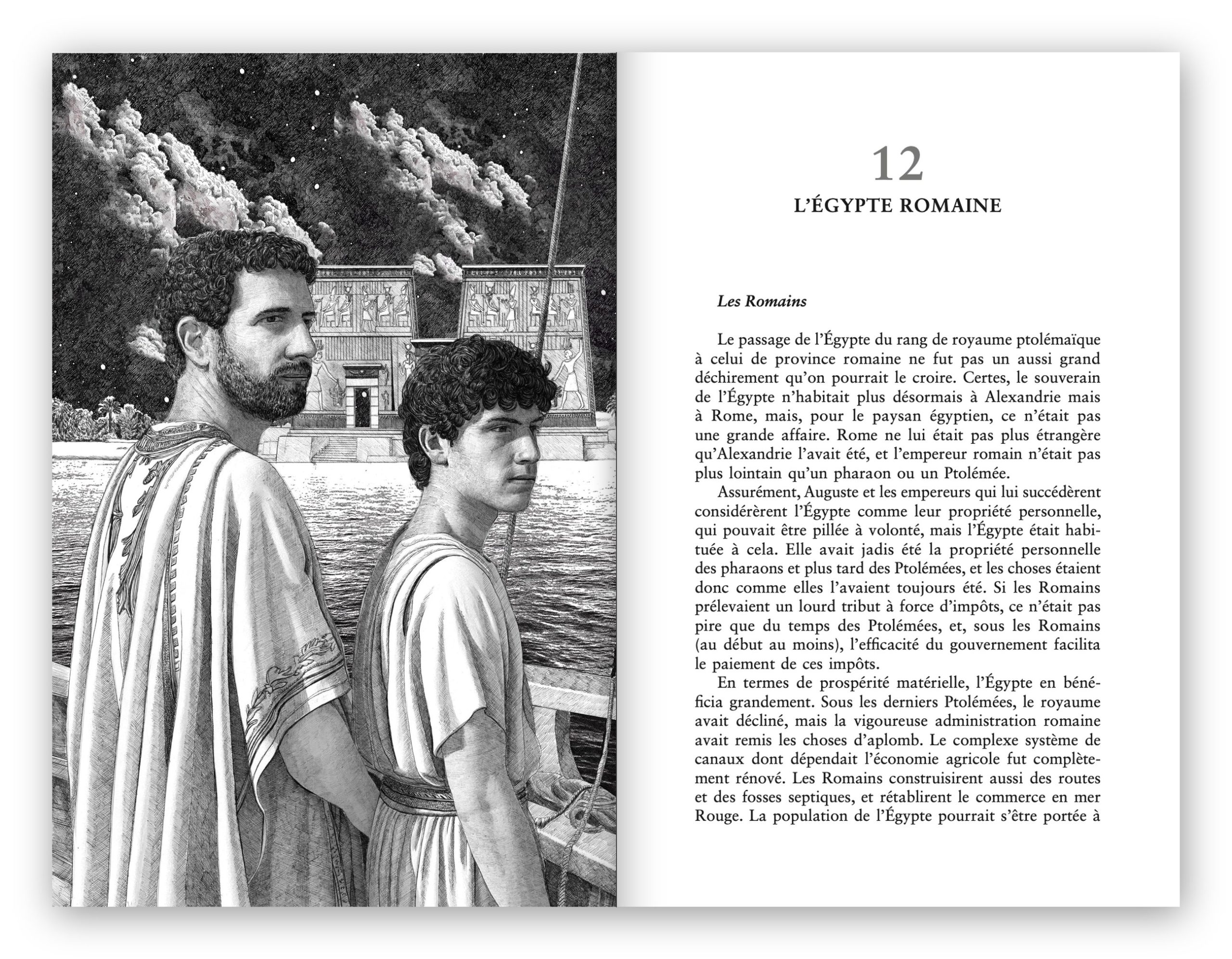
Chapter XII, Roman Egypt
The emperor Hadrian travels on the Nile aboard a Roman boat, accompanied by Antinous. In the background stands the temple of Isis at Philae, a reminder that Egyptian cults and architecture endured under Roman rule. Antinous, shown lost in thought as he faces the river, foreshadows the tragic fate that would bind him to Egypt forever.
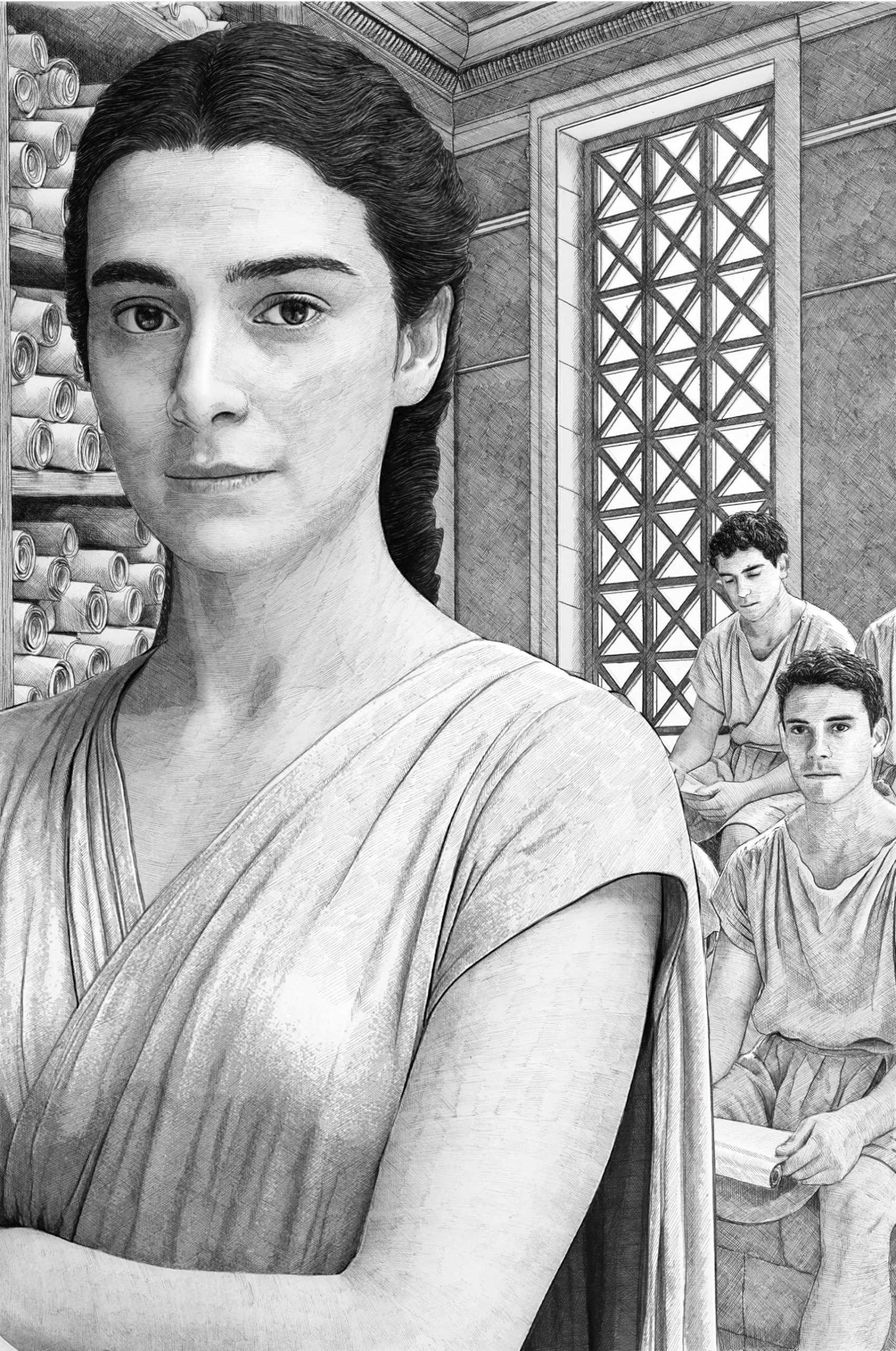
Chapter XIII, Christian Egypt
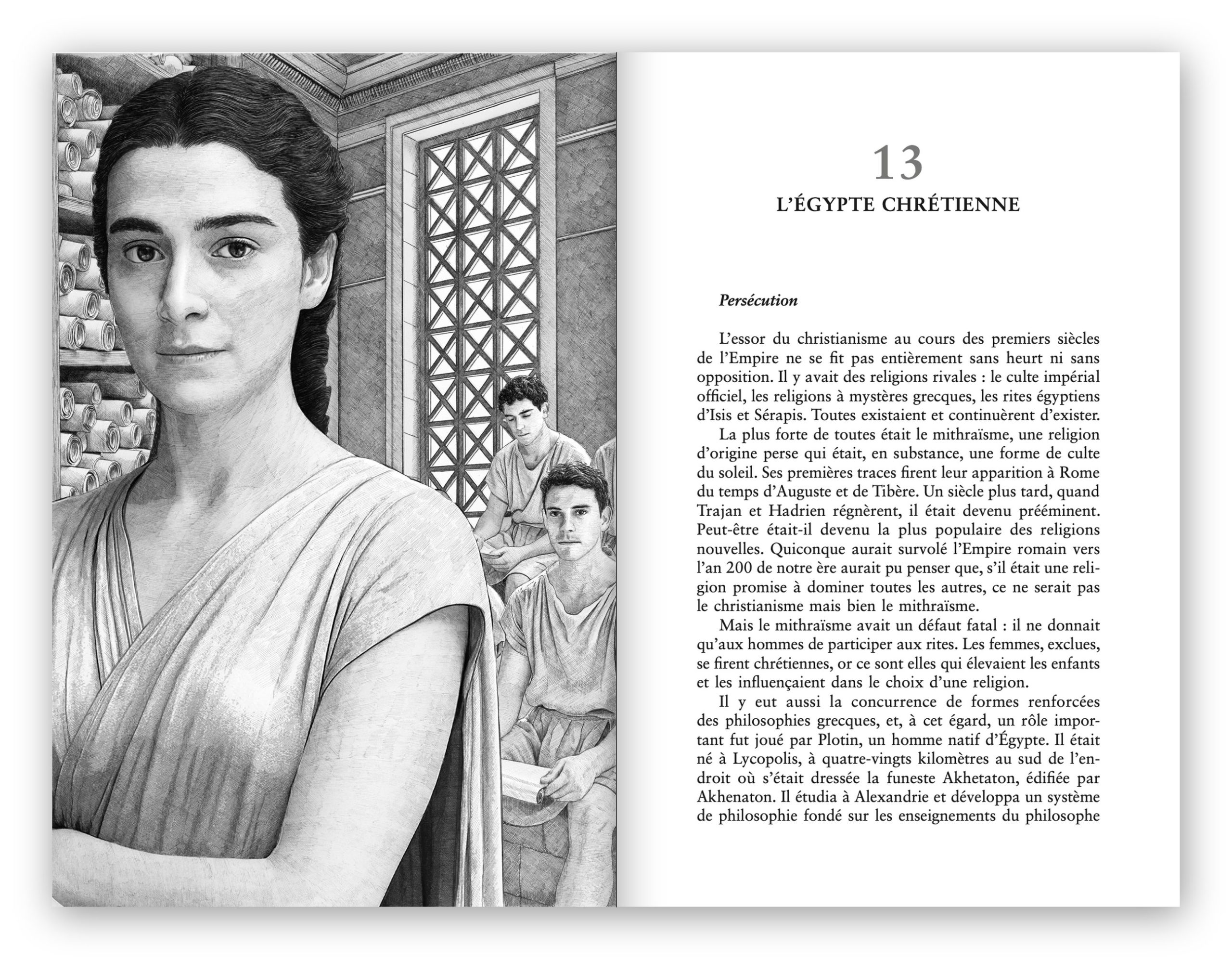
Hypatia teaches among her disciples in a study hall in Alexandria. Philosopher, mathematician and astronomer, she is surrounded by scrolls and manuscripts that evoke the importance of passing on knowledge in the city. The composition deliberately focuses on the relationship between the scholar and her students, at a time when the ancient world was going through deep cultural and religious upheaval.
Chapter XIV, The Final Scenes
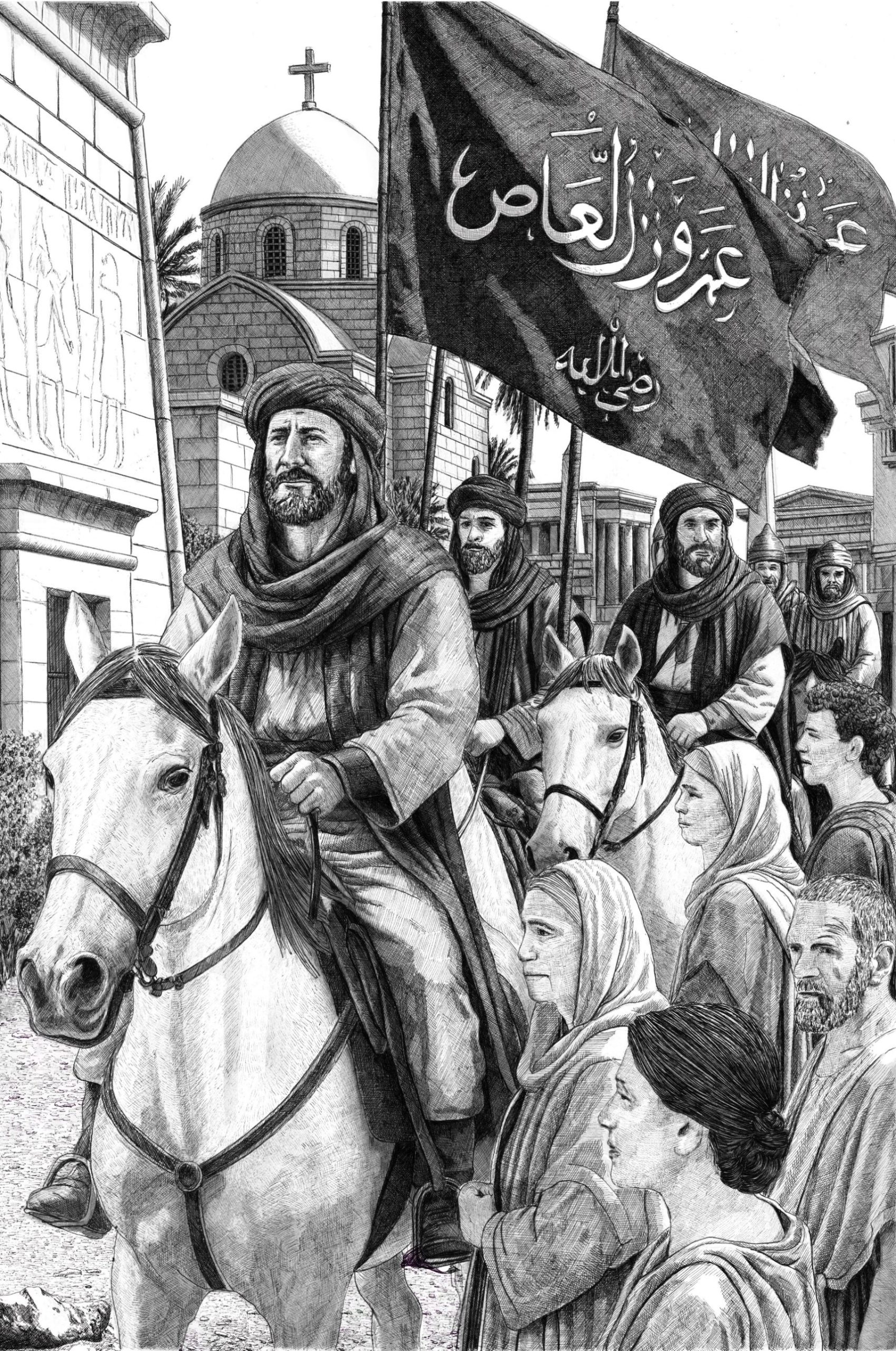
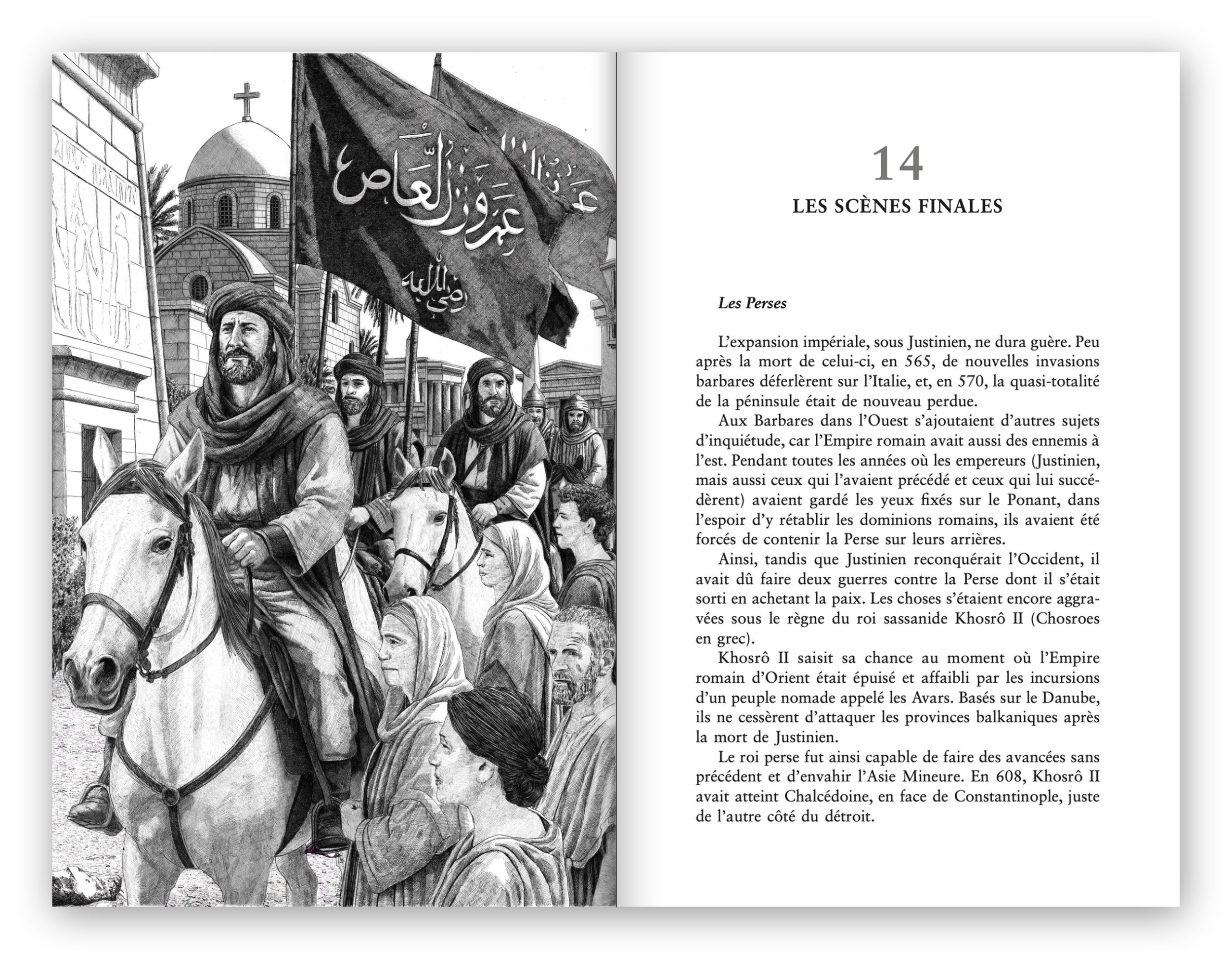
The last illustration takes us to 641, when Egypt came under the control of the Arab armies. Amr ibn al-As leads the procession on horseback, followed by his soldiers, while the inhabitants watch them arrive. In the cityscape, I deliberately placed a Coptic church close to an Egyptian temple. This proximity does not reflect a precise topography, but it visually condenses the many layers of the country’s history and closes the series on the idea of transition between civilisations.
These last seven compositions complete the fourteen illustrations created for Les Égyptiens. From the first communities settled on the banks of the Nile to the transformations of the seventh century, the two parts form a visual journey through several thousand years of Egyptian history.
Les Égyptiens, Isaac Asimov
Les Belles Lettres, 2026
Illustrations: Benjamin Van Blancke
Ink drawing