Publishing
The Egyptians, part I
Éditions Les Belles Lettres, 2026
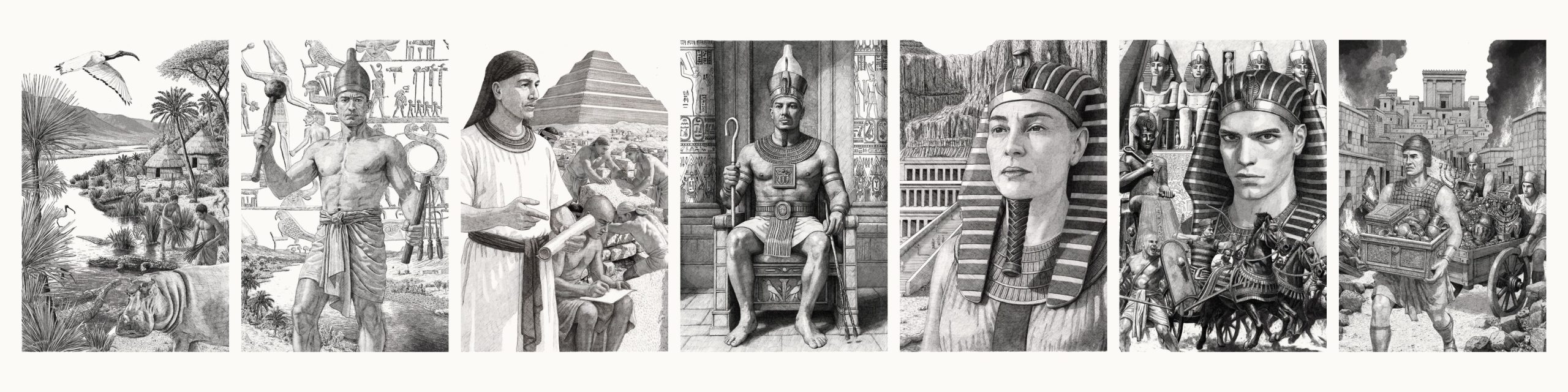
Illustrations for The Egyptians by Isaac Asimov, Les Belles Lettres, 2026: seven of the fourteen illustrations made for the book
In 2026, I continued my collaboration with Les Belles Lettres with Les Égyptiens (The Egyptians), the fourth book I have illustrated in this series devoted to the great civilisations and their history.
I created fourteen original illustrations for the book in all. This first part presents the first seven, each matching a chapter and a major period of Egyptian history, from the first communities settled in the Nile valley to the era of foreign rule. The other seven illustrations are presented in a second part.
Each drawing was conceived as a self-contained historical scene. I sought to bring together figures, architecture, landscapes and emblematic objects to sum up an era in a single composition, while keeping a narrative dimension.
Chapter I, Prehistoric Egypt
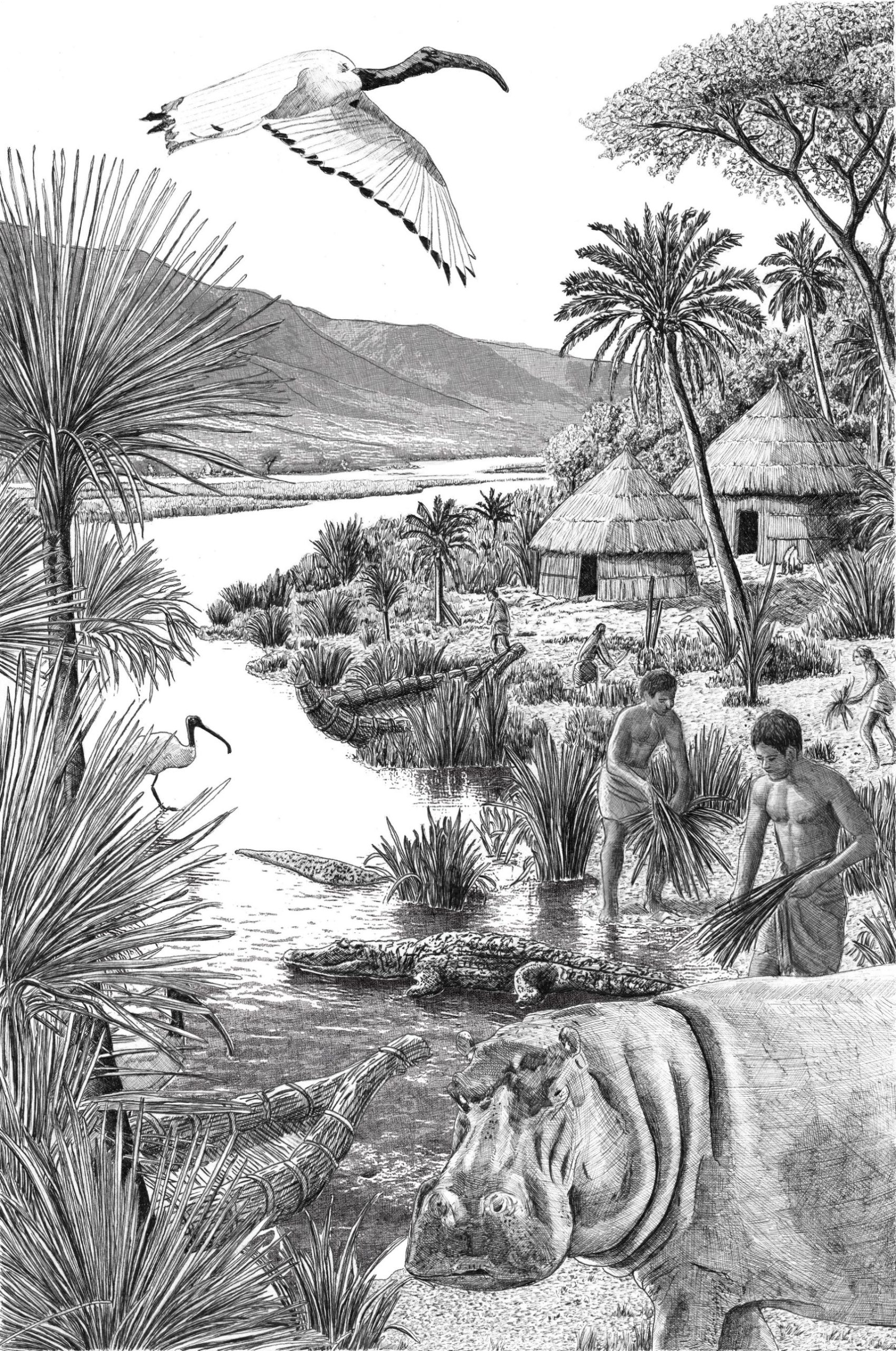
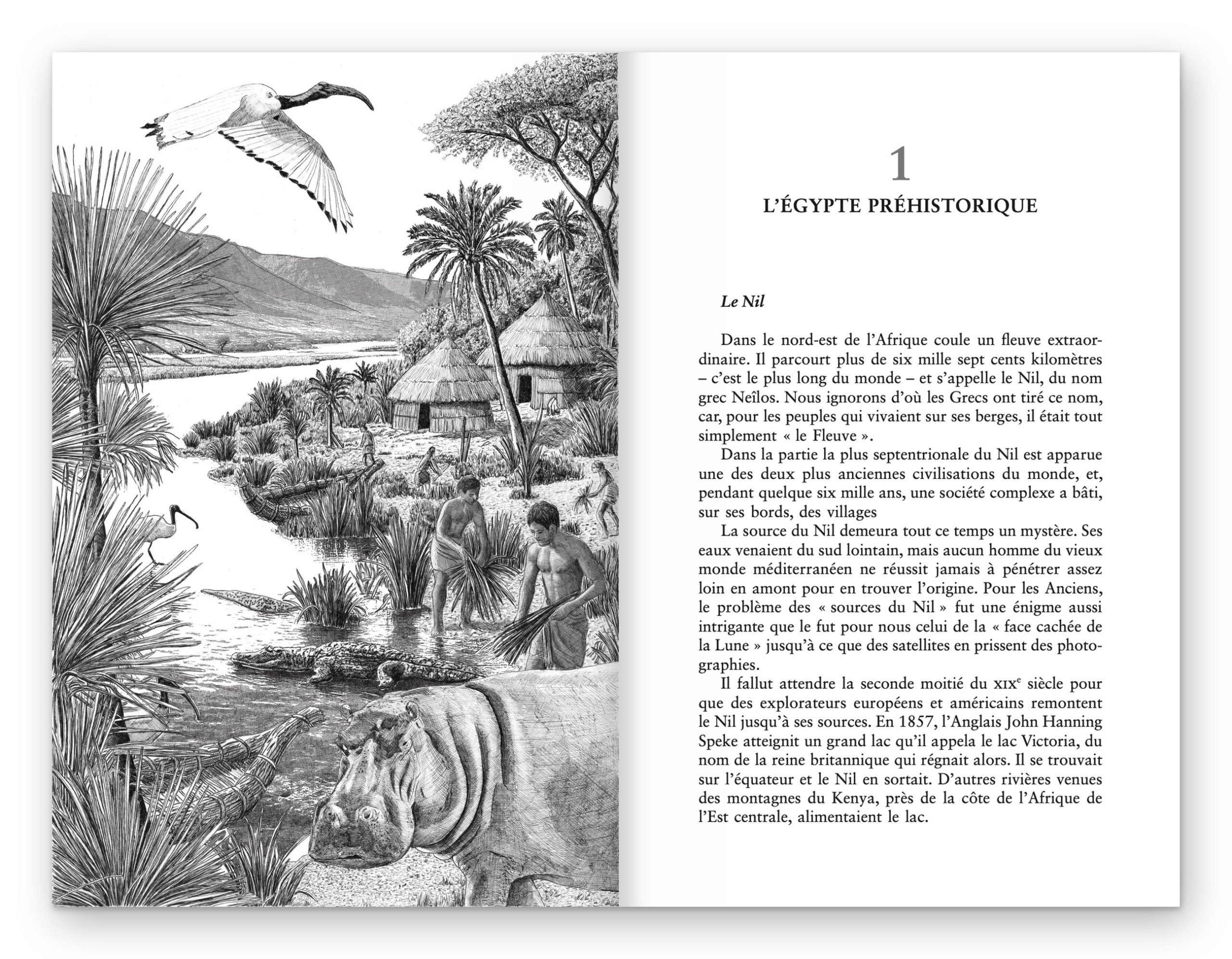
The Nile structures the whole composition. The river, its marshes and its vegetation form the heart of a landscape in which the first communities settled on its banks appear. The inhabitants gather reeds near their huts, while crocodiles, a hippopotamus and ibises recall the richness of this environment. In the distance, more arid hills evoke the gradual drying of the Sahara and the movement of peoples towards the fertile valley. The elements were deliberately brought together to tell, in a single image, the birth of a way of life organised around the river.
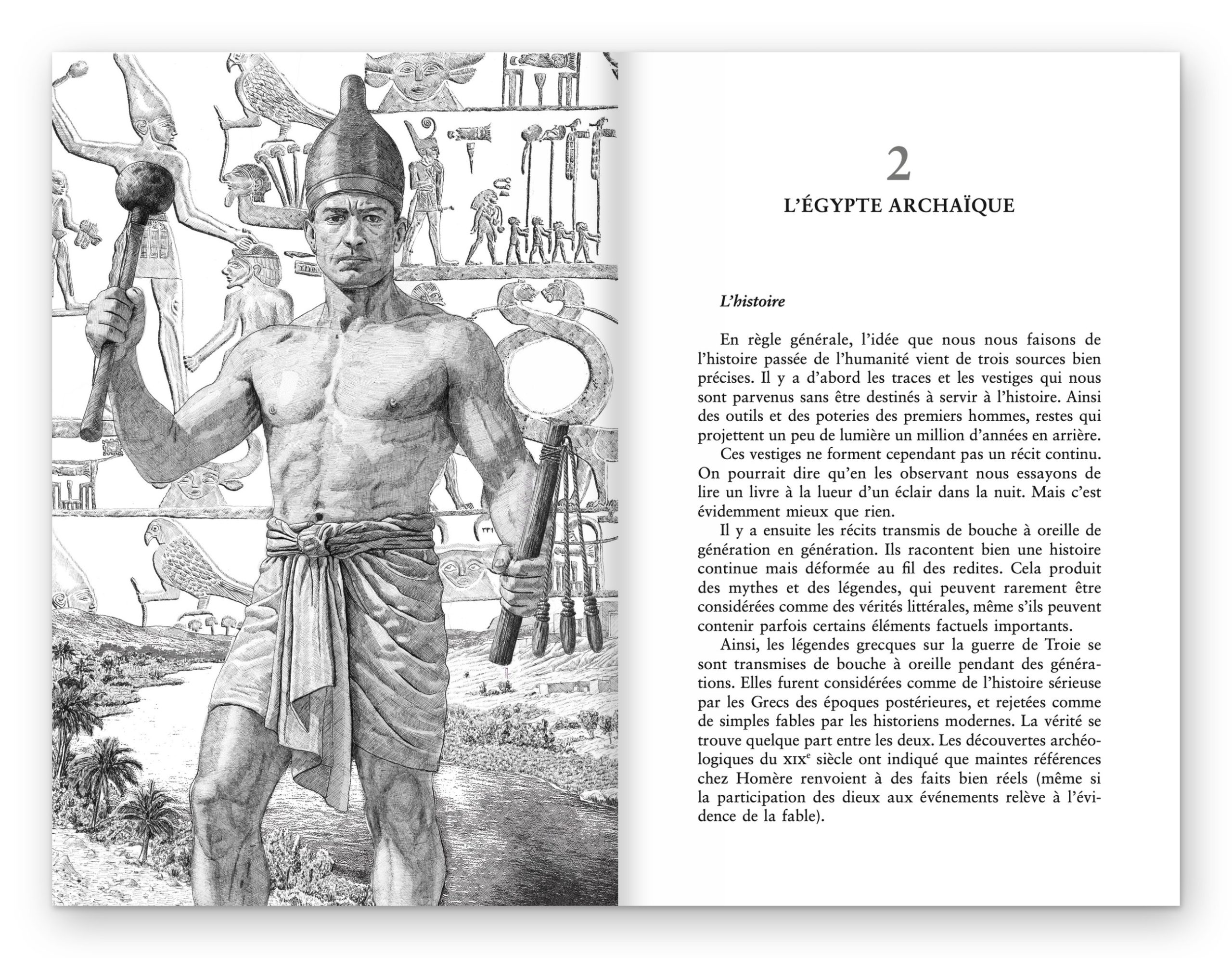
Chapter II, Archaic Egypt
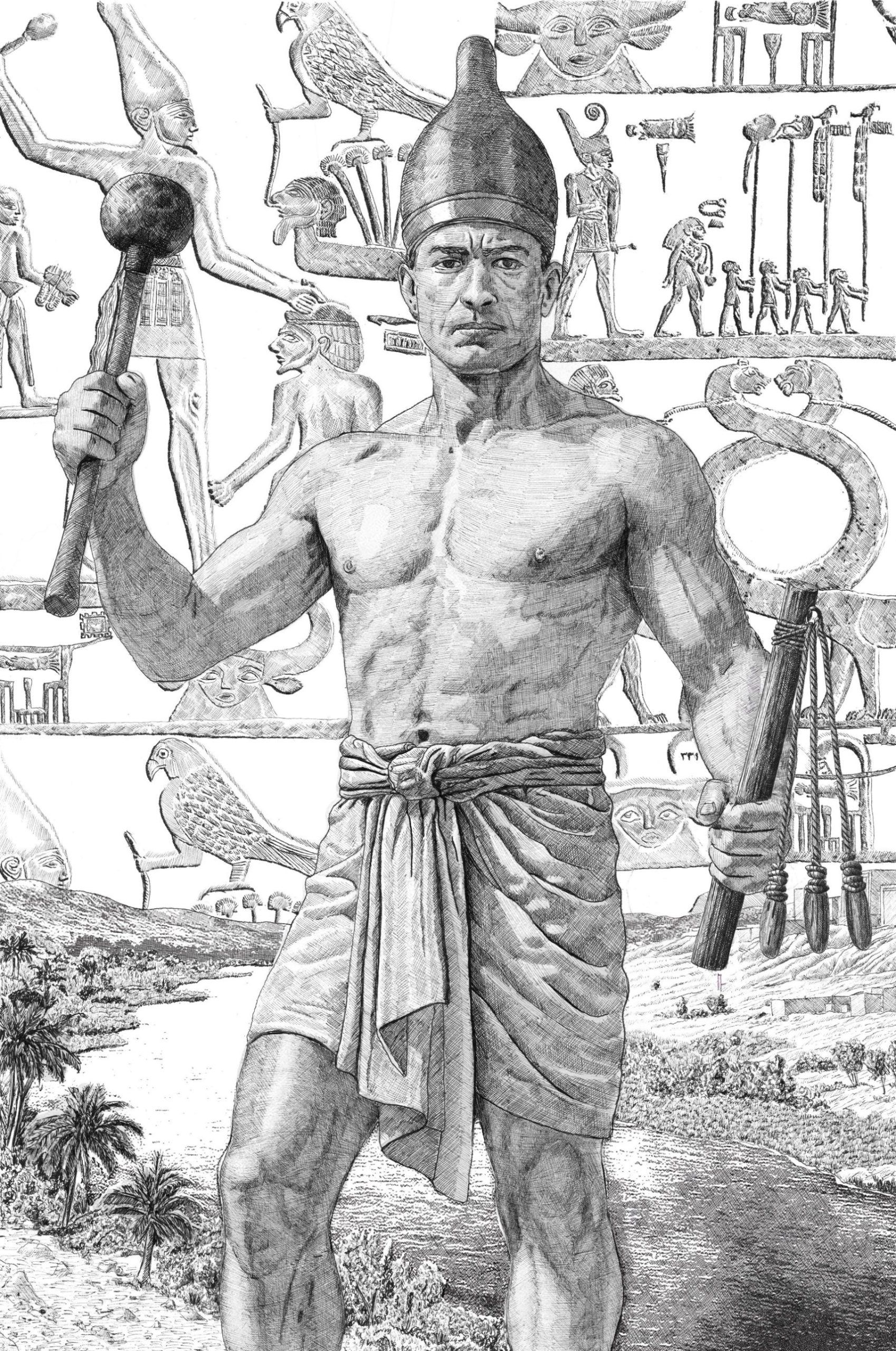
Narmer is shown from the front, wearing the white crown of Upper Egypt and holding a mace, at the time of the unification of Upper and Lower Egypt around 3100 BC. The ruler fills almost the whole space to express the emergence of a centralised royal power. He holds the attributes of his authority, while the walls around him take up motifs inspired by ancient Egyptian iconography and the Narmer Palette.
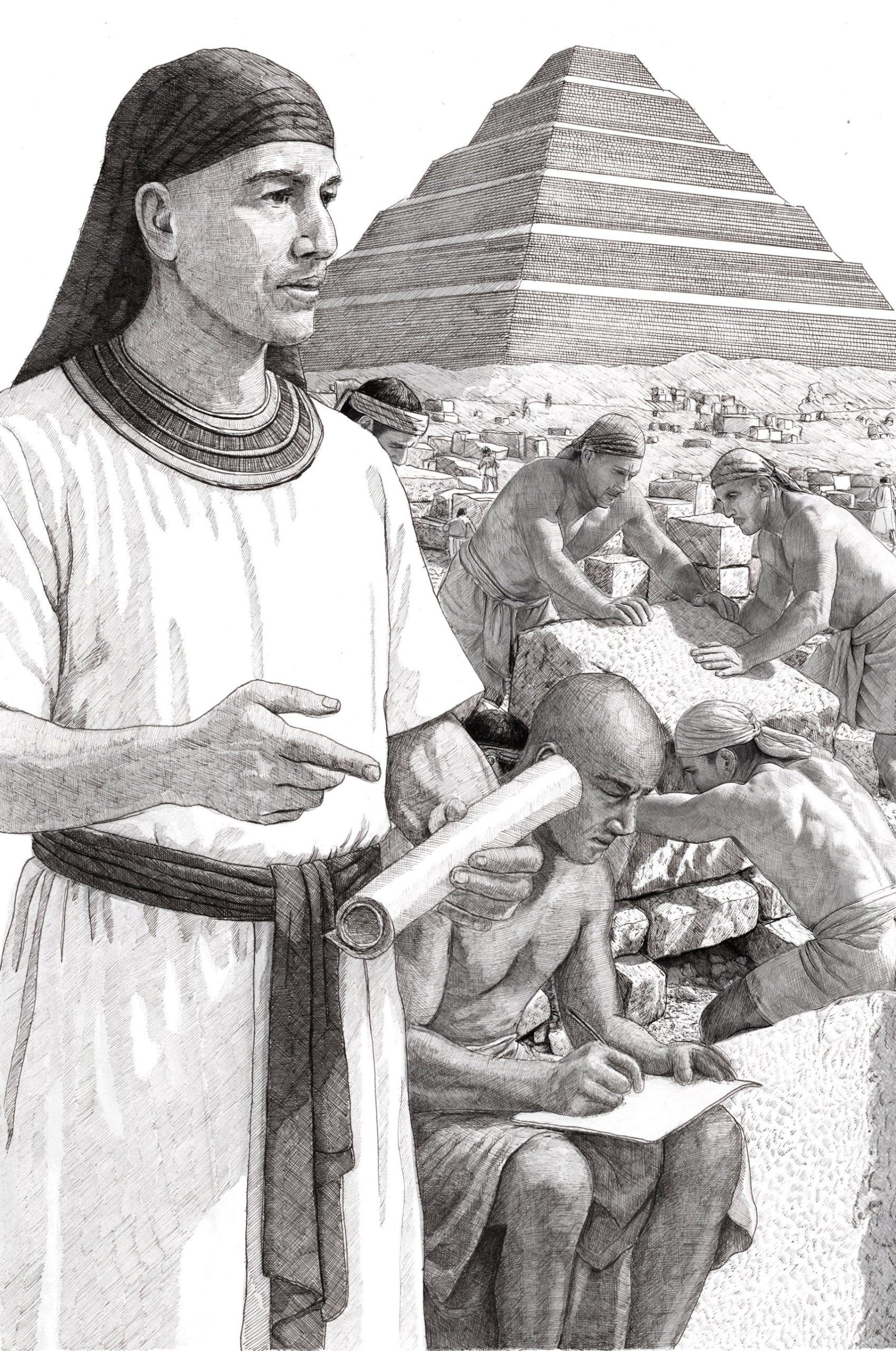
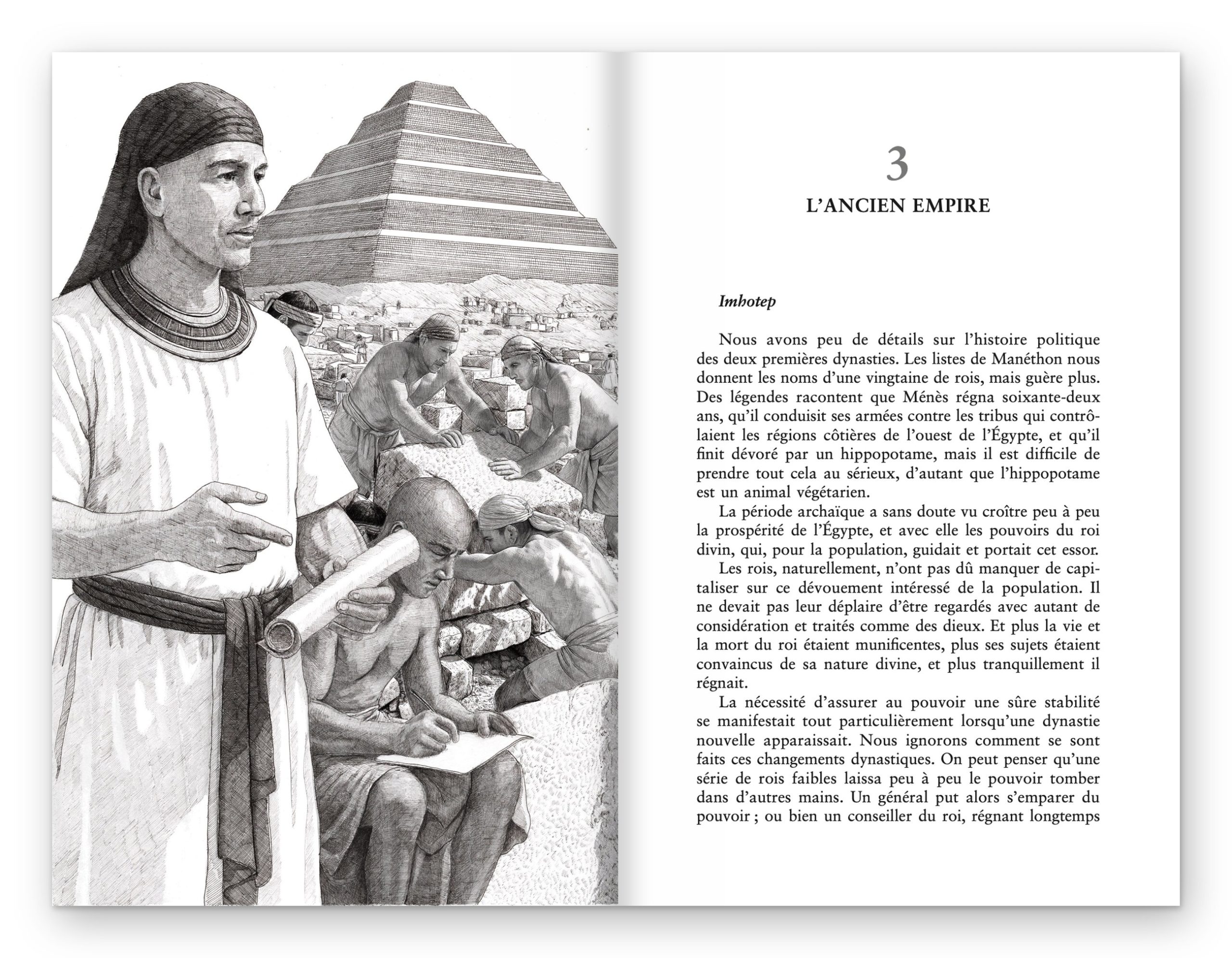
Chapter III, The Old Kingdom
This composition is devoted to the rise of monumental stone architecture. Imhotep, architect and scholar of the Third Dynasty, dominates the foreground and gives his instructions, scroll in hand. Behind him, stonecutters and workers take part in the vast building site of Djoser’s step pyramid. I wanted to show the monument as much as the people and the organisation needed to build it.
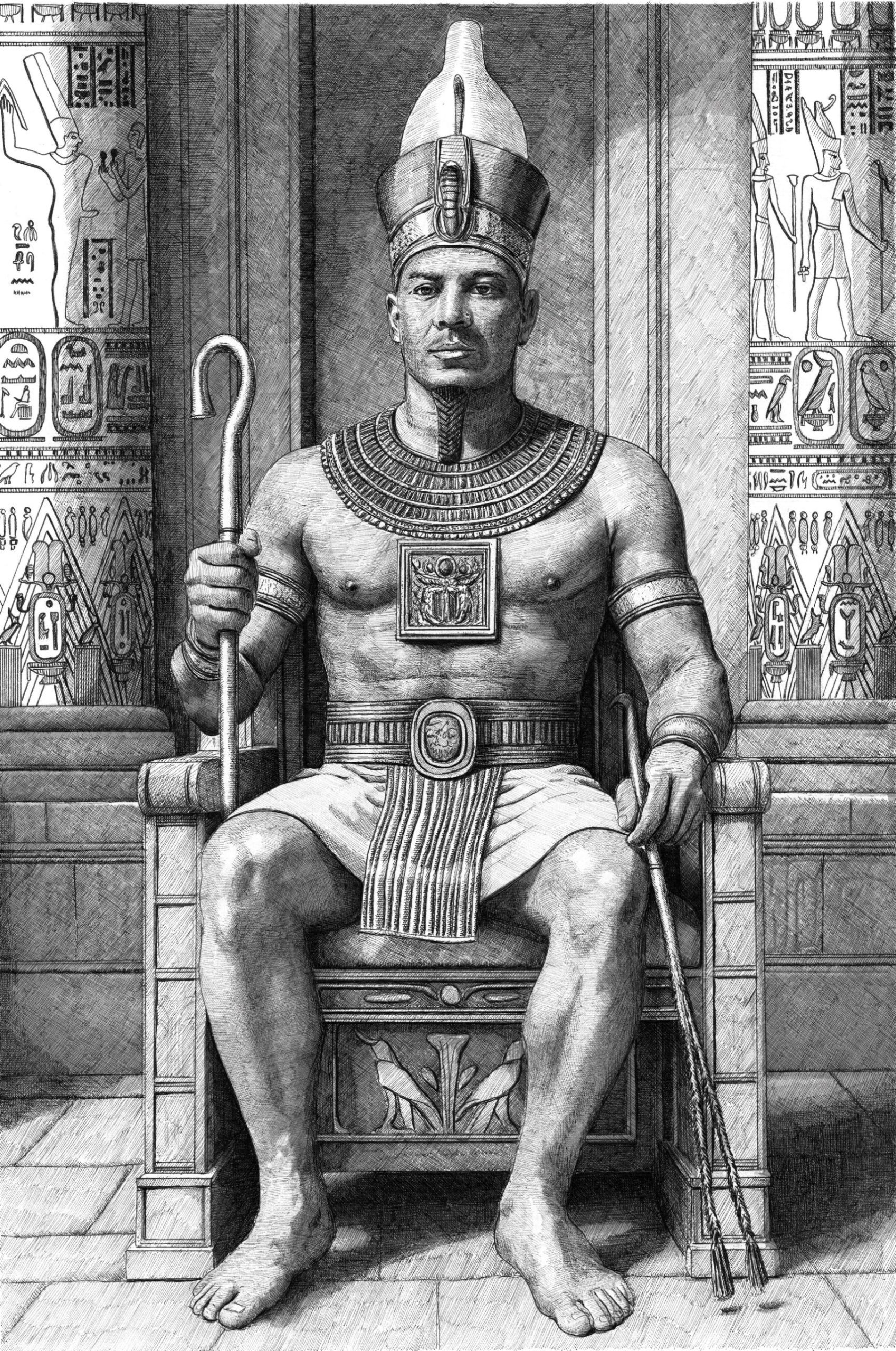
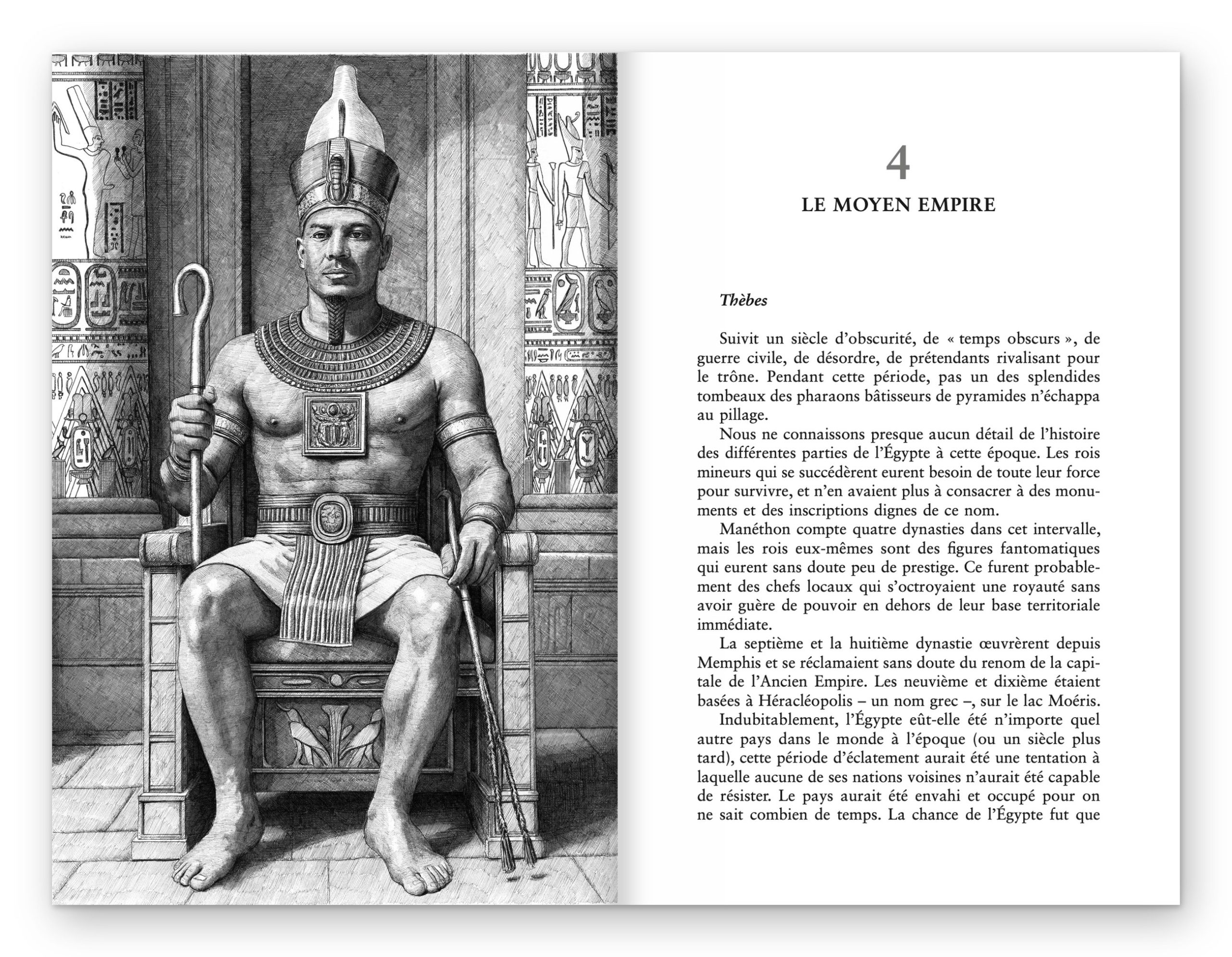
Chapter IV, The Middle Kingdom
After a long period of political fragmentation, Mentuhotep II reunified Egypt and ushered in a new period of stability. I depicted him seated on his throne, wearing the double crown, in a frontal and highly architectural composition. His figure, the royal attributes and the hieroglyphic decoration create a deliberately solemn image, centred on the return of pharaonic authority and the unity of the kingdom.
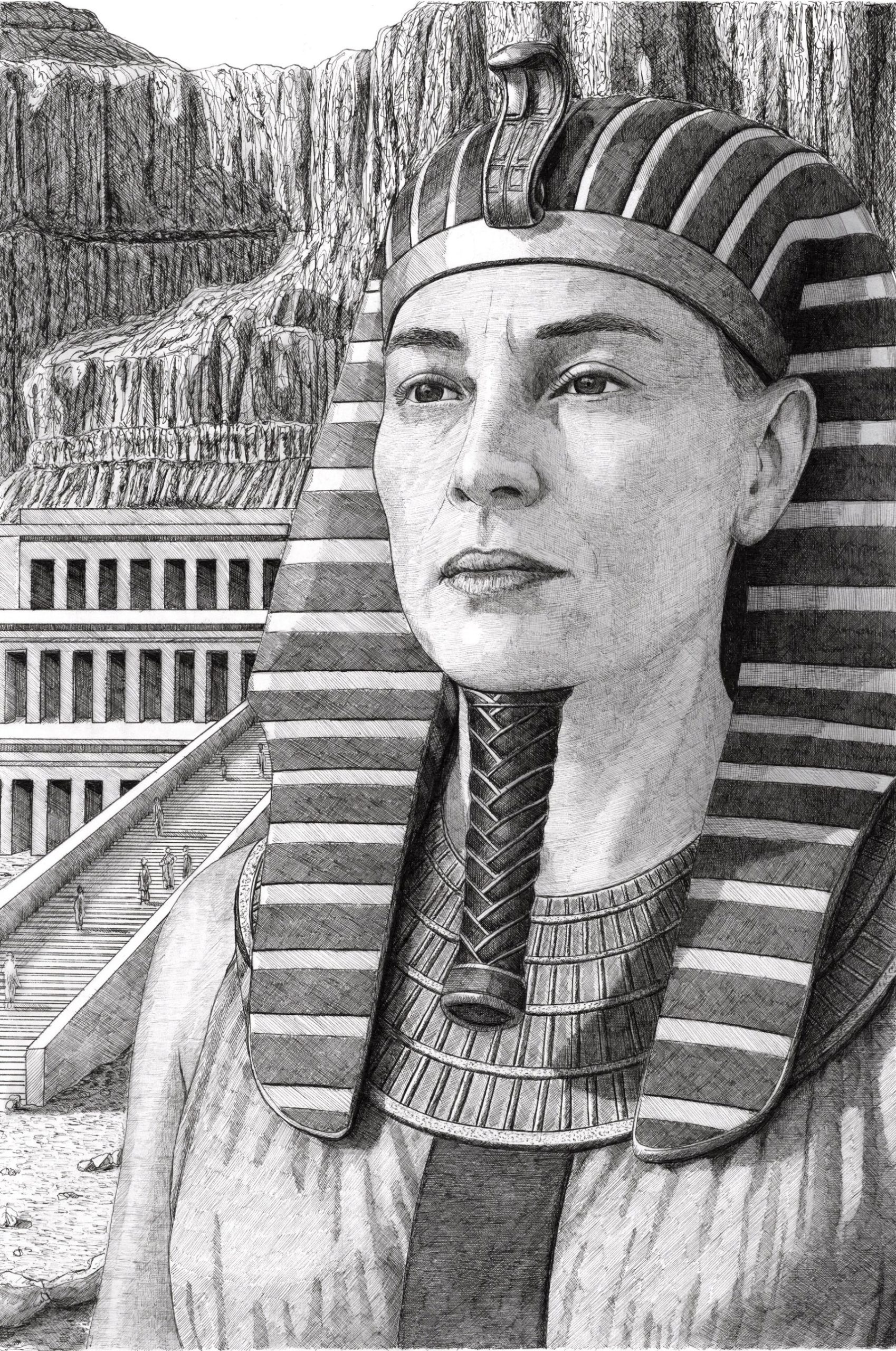
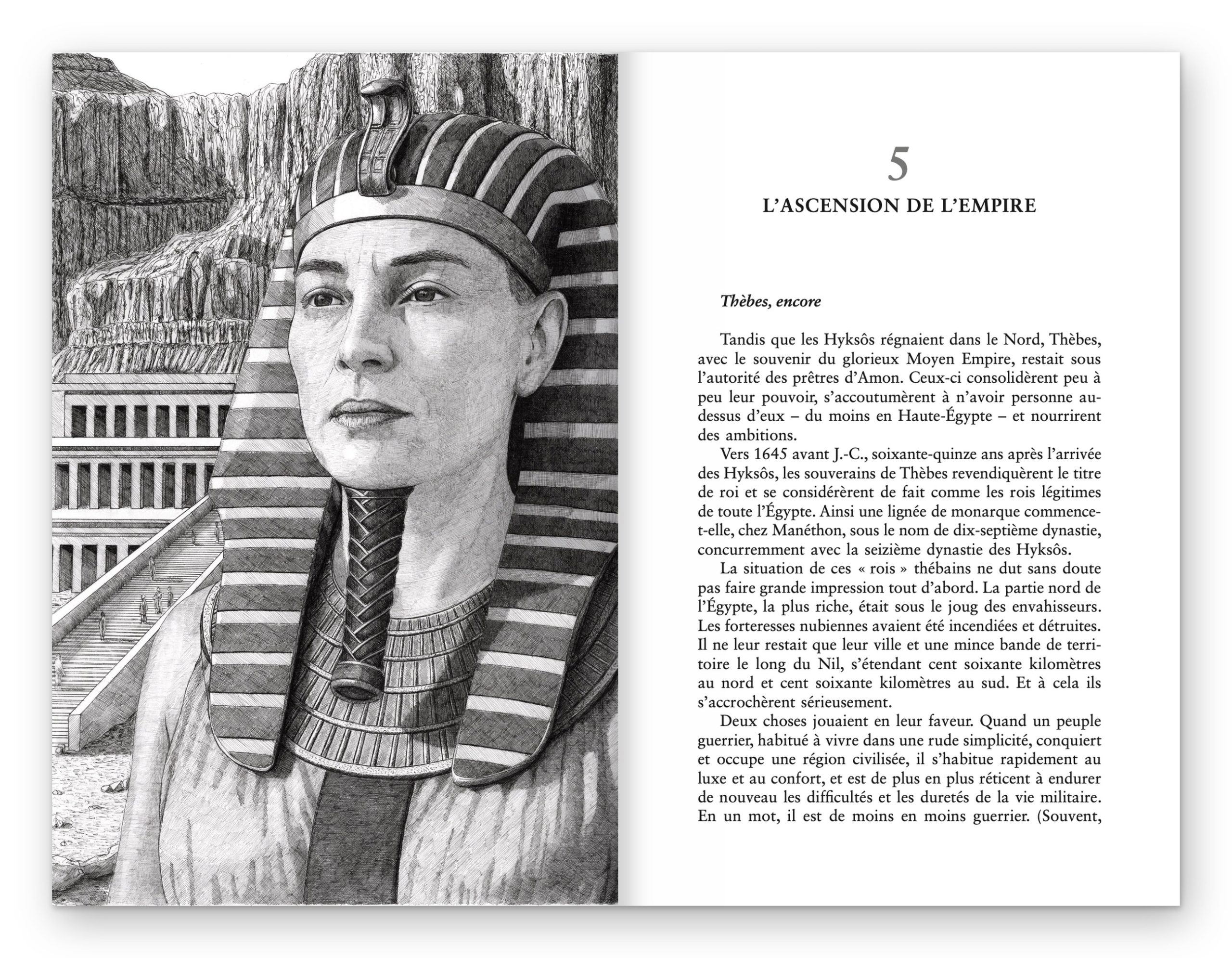
Chapter V, The Rise of the Empire
Hatshepsut fills almost the full height of the drawing, shown with the traditional attributes of a pharaoh. Behind her stands her mortuary temple at Deir el-Bahari, whose terraces and long colonnades blend into the Theban cliffs. The contrast between the monumental portrait of the queen and the small-scale figures evokes both her reign and the scale of the achievements that accompanied the rise of the New Kingdom.
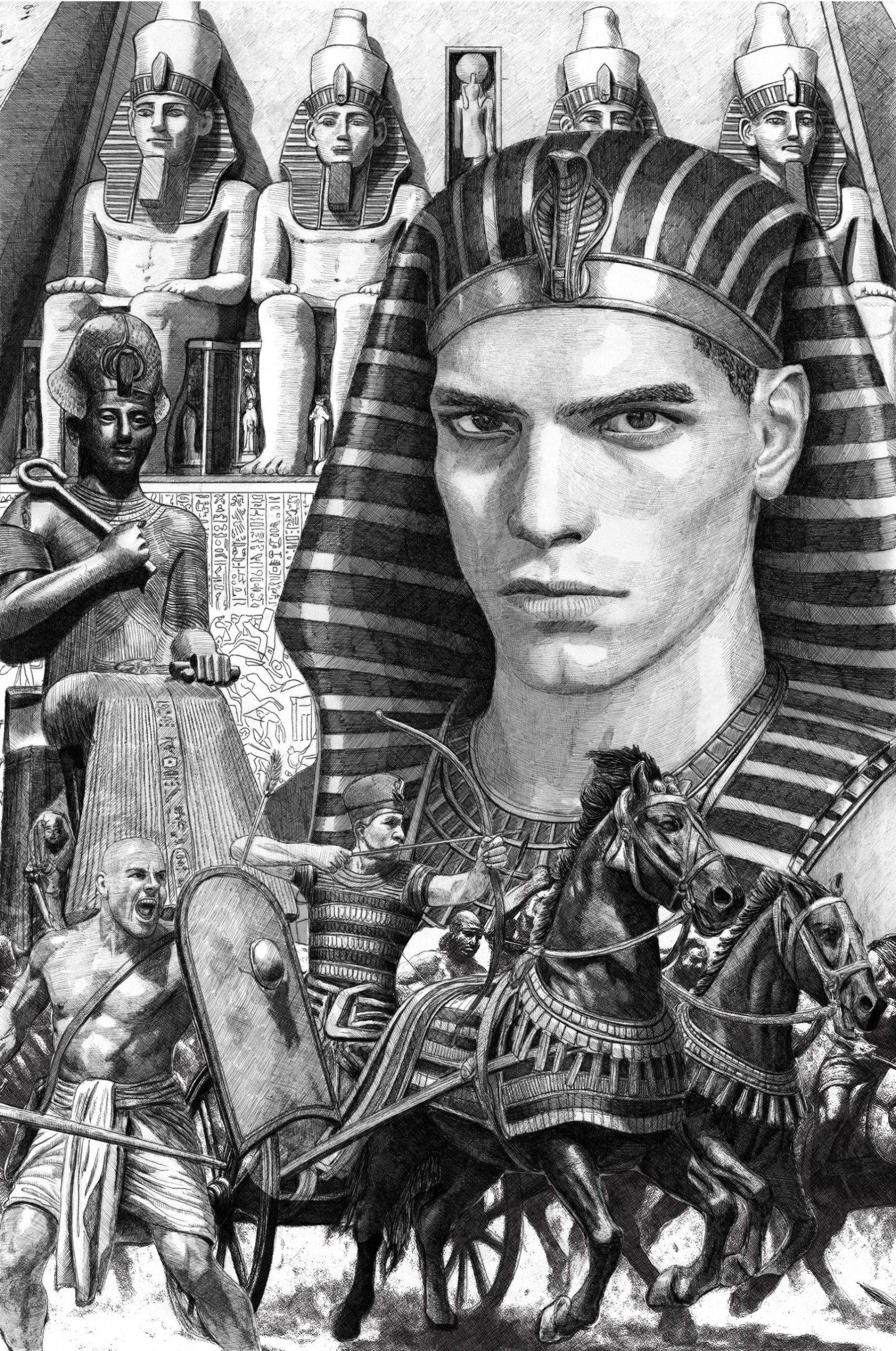
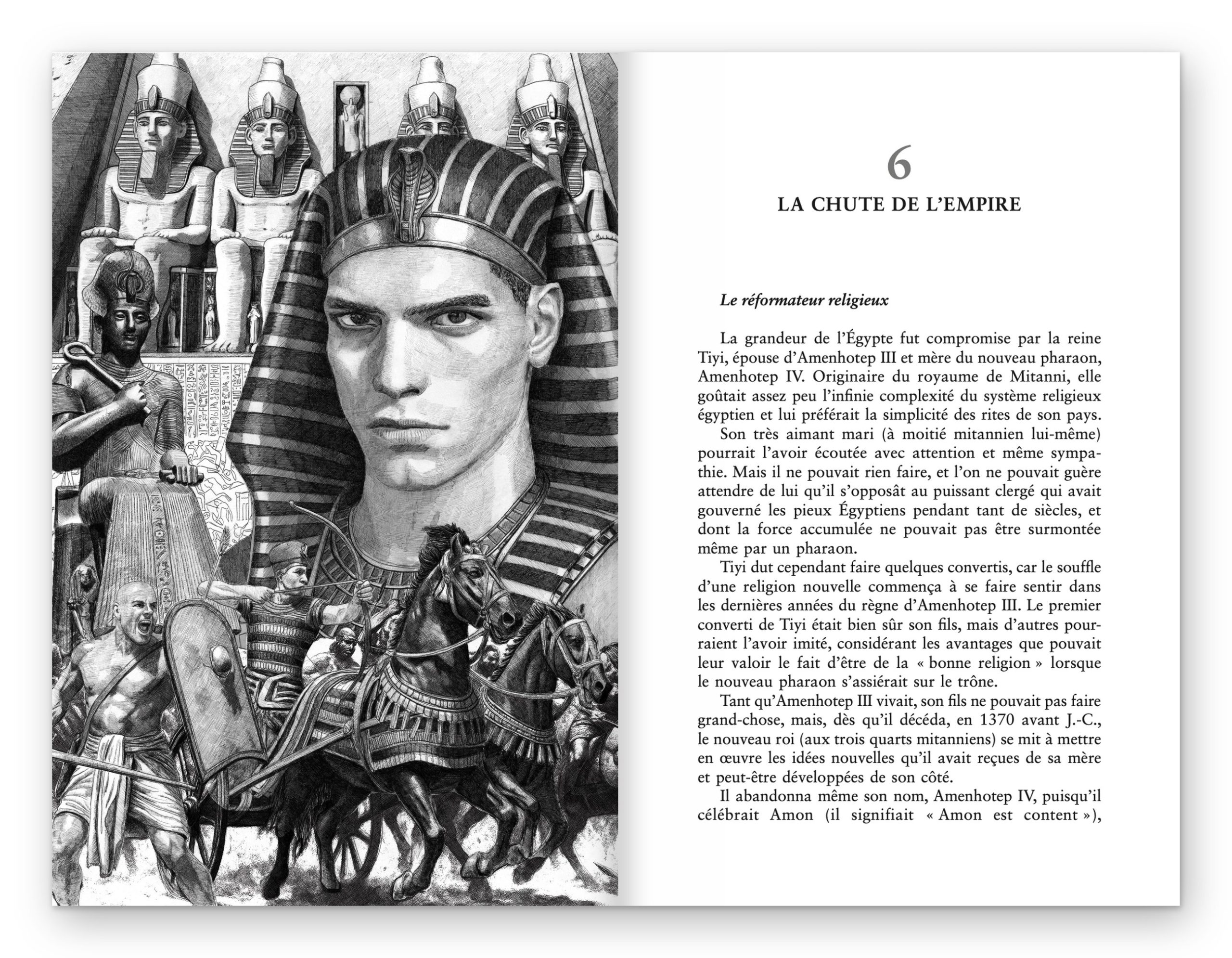
Chapter VI, The Fall of the Empire
The composition devoted to Ramesses II works as an accumulation of images of power. His immense face dominates the scene, surrounded by representations of the king and his monumental architecture. In the foreground, chariots, horses and soldiers evoke the battle of Kadesh. The whole shows how Ramesses II used war, monuments and his own image to build his legend and inscribe his reign in memory.
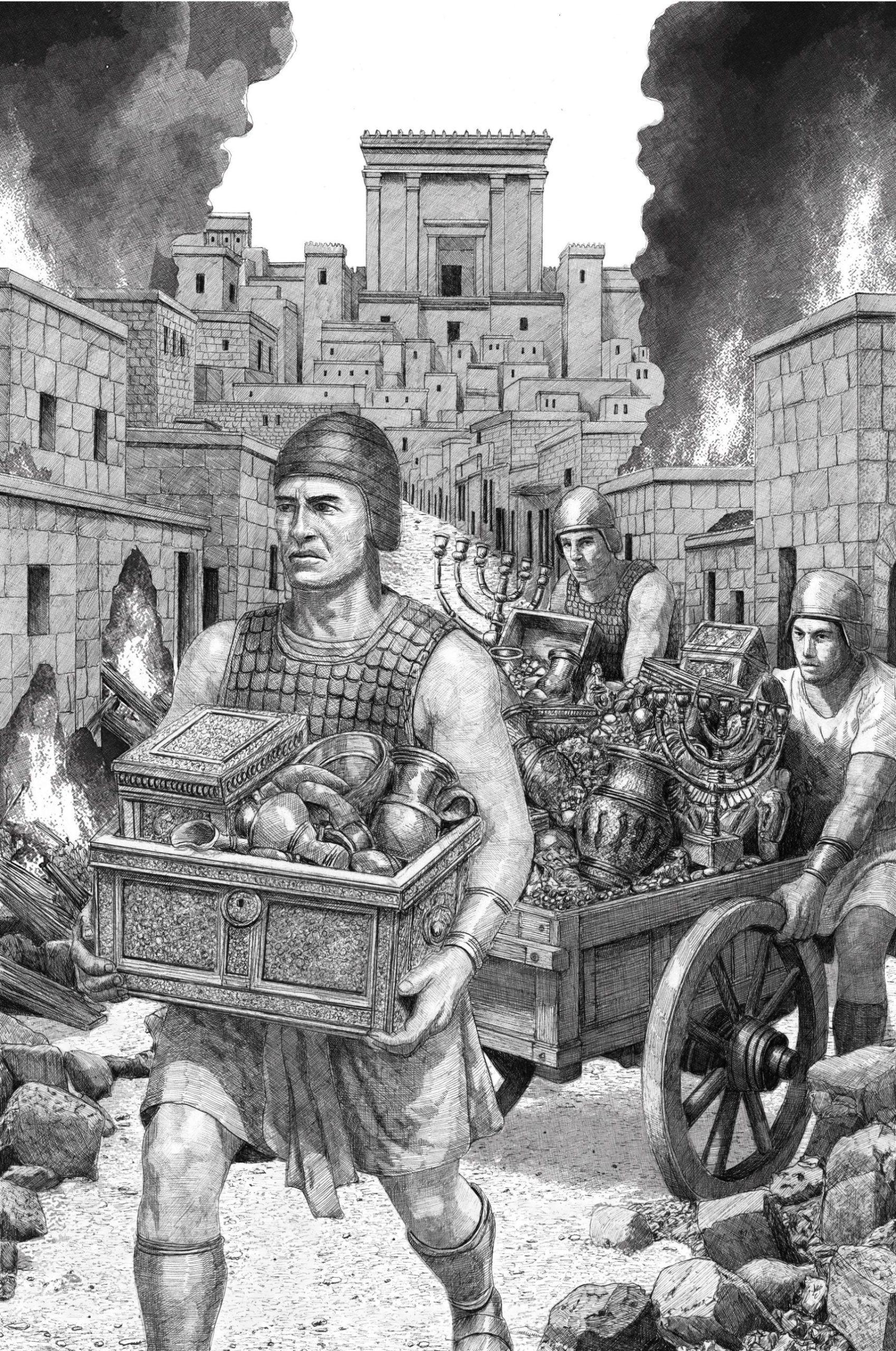
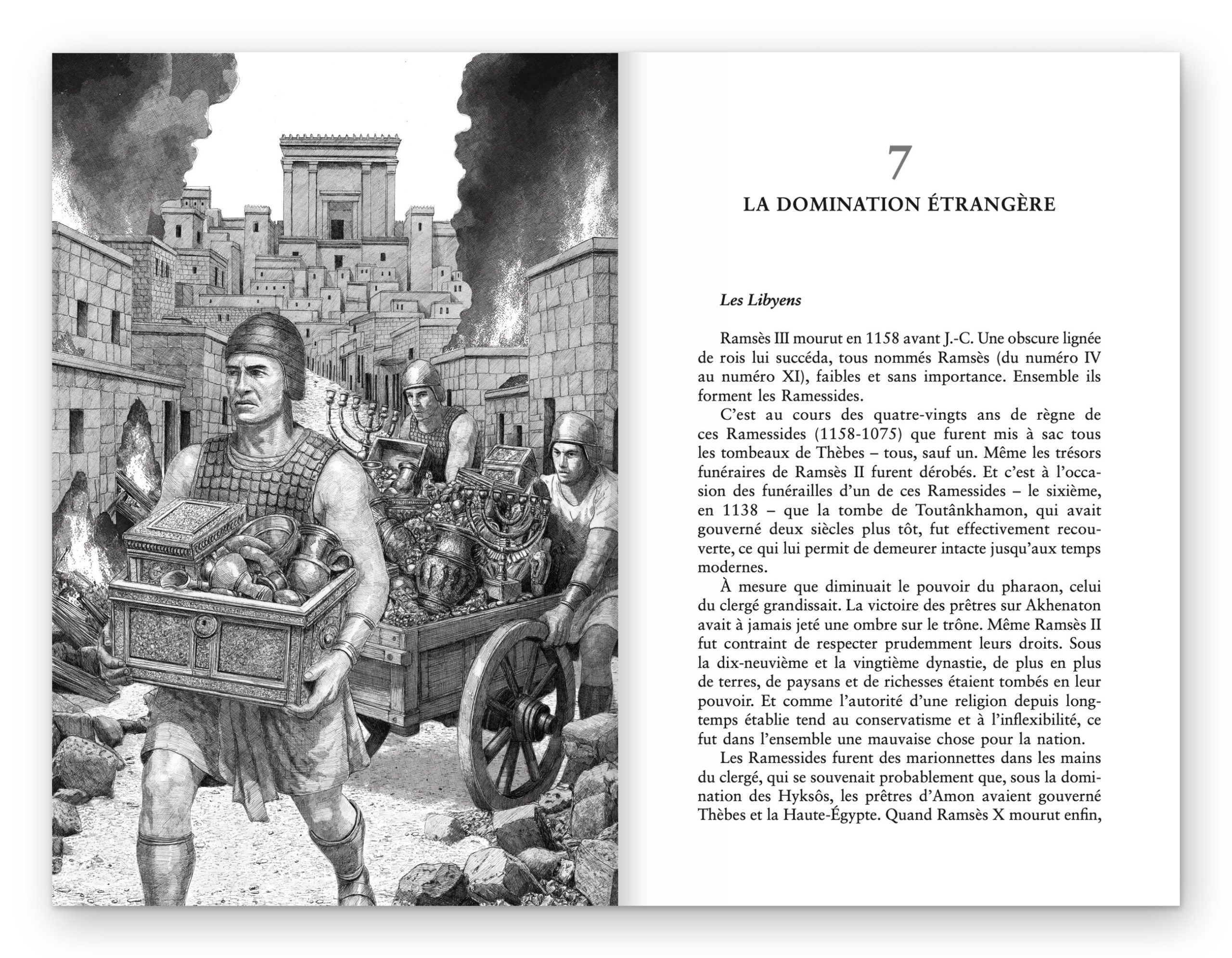
Chapter VII, Foreign Rule
The last drawing of this first part depicts the sack of Jerusalem associated with the campaign of Shoshenq I. Soldiers carry away chests, precious objects and ritual furnishings while the city burns around them. Solomon’s Temple dominates the background. Unlike the monumental portraits of the earlier chapters, I favoured movement and disorder here, with the figures advancing towards the viewer laden with their spoils.
These seven drawings make up the first half of the fourteen illustrations created for Les Égyptiens. The second part continues this journey through Egyptian history with seven new compositions.
Les Égyptiens, Isaac Asimov
Les Belles Lettres, 2026
Illustrations: Benjamin Van Blancke
Ink drawing